Strength training for kids is one of the most misunderstood areas in youth development.
Many parents still picture heavy barbells, injury risk, or the idea that lifting weights will somehow stunt growth. That thinking is outdated. When done properly, strength training is not only safe for kids, it is one of the most effective ways to build confidence, resilience, and long-term athletic ability.
As a coach working with young athletes across multiple sports, I see this firsthand. The kids who benefit most are not the ones pushed the hardest. They are the ones who learn how to move well, build strength progressively, and gain confidence through consistent effort over time. The key is understanding what strength training actually means at each stage of development.
What strength training for kids really means
Strength training does not begin with weights. It begins with control, coordination, and awareness of movement.
For younger children, the priority is not traditional strength and conditioning in the adult sense. Like adults, kids benefit from developing movement proficiency first. The key difference is that children are still developing physically, neurologically, and emotionally, so they need time to build a foundation before more formal strength and conditioning principles can be applied.
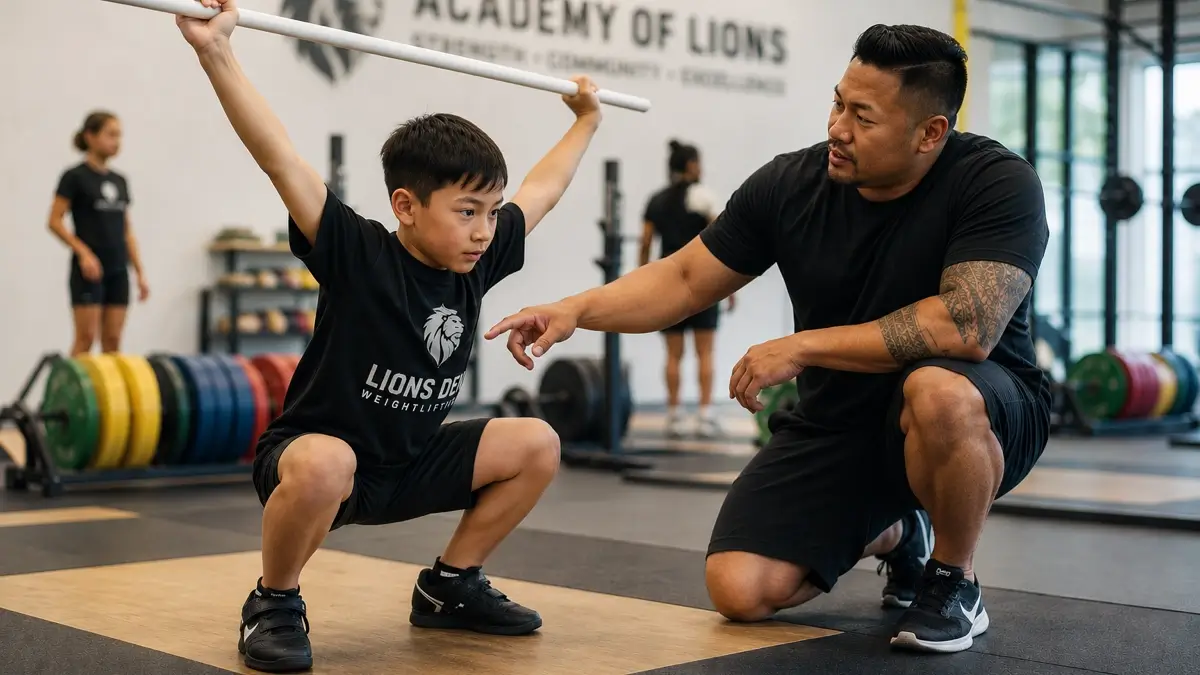
That foundation is built through bodyweight exercises, balance work, stabilization, and basic movement patterns like squatting, lunging, pushing, pulling, and controlling their body in space. These activities develop coordination, confidence, body awareness, and movement quality. Strength may improve along the way, but the main goal at this stage is not how much a child can lift. It is how well they move.
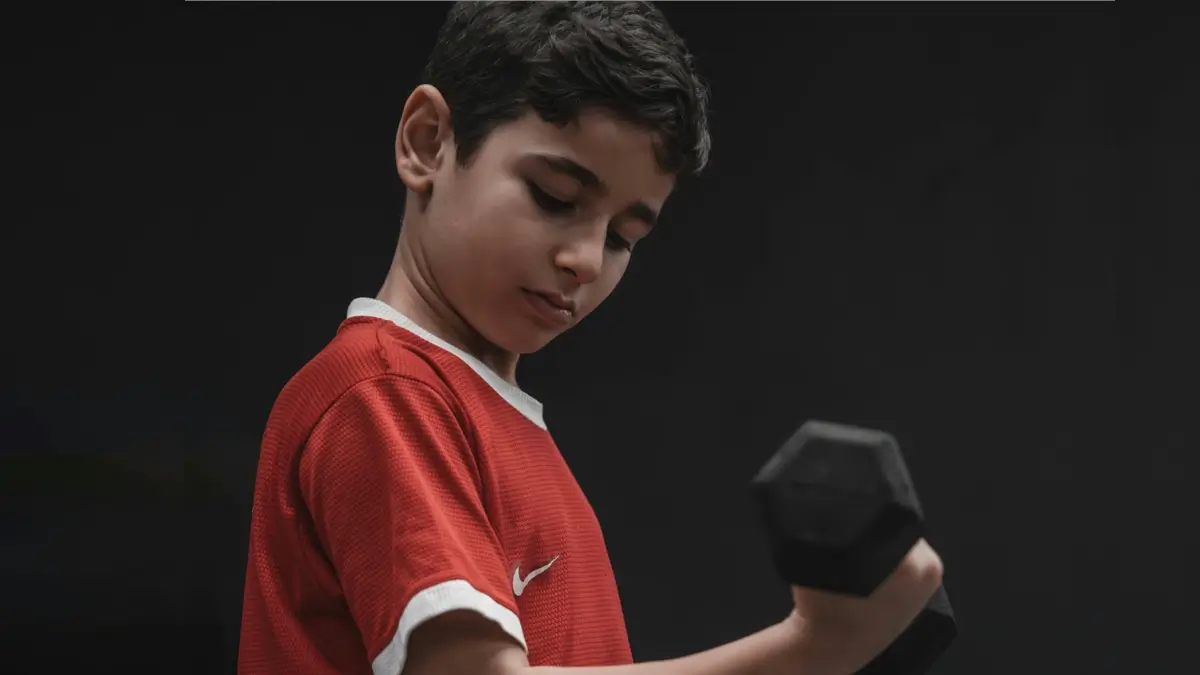
Once that movement foundation is in place, resistance can be introduced gradually through bands, light weights, medicine balls, or structured programming that emphasizes proper technique. This progression is what makes youth strength training safe, effective, and developmentally appropriate.
Find programs and gyms that help your young athlete be their best at their sport on the GoPlay platform. Free to browse, no account needed. Visit: https://app.goplay.ai or click the button below
Is strength training safe for kids?
When supervised properly and taught with correct technique, strength training is widely considered safe for children. It can also play a meaningful role in reducing injury risk across sports by improving joint stability, coordination, and overall movement quality.
Well-designed youth strength programs have been shown to reduce sports-related injuries by as much as 30 to 50 percent by improving strength and control.
The real risk is not strength training itself. It is poor instruction, lack of supervision, or pushing children into programs that are not appropriate for their stage of development. Most issues arise when technique is ignored or when intensity increases too quickly. For parents, the takeaway is simple. The quality of coaching and progression matters far more than the equipment being used.
When should kids start strength training?
There is no single age that applies to every child. Readiness matters more than a number. Most children can begin structured movement training between ages 6 and 8, focusing on coordination, balance, and control. At this stage, there is no need for external resistance beyond bodyweight and simple tools.
Between ages 9 and 12, many kids are ready to begin more structured strength training with light resistance, provided they can follow instructions and demonstrate proper form. The emphasis should remain on technique and consistency rather than performance.
During adolescence, strength training can become more progressive and tailored to sport demands, but the same principles still apply. Movement quality always comes first.
Strength training for kids by age and stage
Parents often ask for a clear starting point. While development varies, the progression below reflects how strength training typically evolves as kids grow.
| Age Range | Focus | What It Looks Like | What to Avoid |
| Ages 5–7 | Movement fundamentals | Climbing, jumping, balance work, basic body control through play-based activities | Formal weight training or structured lifting |
| Ages 8–10 | Body control and coordination | Bodyweight exercises like squats, lunges, push-ups, basic core work, learning proper movement patterns | Adding resistance before technique is consistent |
| Ages 11–13 | Technique + light resistance | Introduction of bands, light dumbbells, structured sessions with coaching, focus on form and repetition | Chasing heavier weights or comparing performance |
| Ages 14–16 | Progressive strength development | More structured programs, gradual increases in resistance, sport-specific strength work | Prioritizing load over movement quality |
| Ages 17+ | Advanced training (if appropriate) | Individualized strength programs, performance-focused training aligned with sport goals | Skipping foundational work or rushing progression |
If you are unsure where your child fits, it is worth comparing programs based on coaching quality and progression rather than age alone.
Find programs and gyms that help your young athlete be their best at their sport on the GoPlay platform. Free to browse, no account needed. Visit: https://app.goplay.ai or click the button below
Effective strength training for kids follows a clear and patient progression.
Early stages should focus on movement quality, including balance, coordination, and control. As children develop, programs can introduce basic strength patterns such as squats, hinges, pushes, pulls, and core stability work. Resistance can then be added gradually once those patterns are consistent.
In practice, I often see kids rush this stage, especially when they are eager to “lift like adults.” The ones who take the time to build proper mechanics early almost always progress further and with fewer setbacks.
What does not work is jumping straight into adult-style training programs or focusing on lifting heavier weights as quickly as possible. Kids are not small adults, and their training should reflect that.
Consistency matters more than intensity. A child who trains regularly with good technique will see better long-term results than one who is pushed too hard and loses interest.
Strength training and confidence
One of the most important and often overlooked benefits of strength training is its impact on confidence. When children learn to control their movements and see steady improvement, they develop a sense of capability. They begin to trust their bodies and understand that effort leads to progress. This is especially valuable for kids who may not immediately excel in traditional team sports.
Strength training provides a clear and individual pathway for improvement. Progress is measurable, and that connection between effort and outcome builds confidence in a way that carries into other areas of life.
How strength training supports other sports
Strength training is not a replacement for sport. It is a foundation that supports it.
According to the British Journal of Sports Medicine, kids who develop strength and coordination tend to perform better across a wide range of activities. They move more efficiently, change direction more effectively, and are better prepared for the physical demands of sport.
This is why a multi-sport approach combined with general strength development is often the most effective path. It builds a well-rounded athlete rather than limiting development to a single set of skills.
If your child is involved in multiple activities, it helps to plan their schedule more intentionally to avoid overload.
Common mistakes parents should avoid
There are a few consistent mistakes that tend to limit progress or increase risk.
One is introducing intensity too early. Parents often assume that more weight or harder training will lead to faster results. In reality, this increases the likelihood of injury and burnout.
Another is focusing on performance over technique. If a child cannot perform a movement correctly, adding resistance only reinforces poor habits and can lead to long-term issues.
Finally, there is the tendency to overcommit. Strength training should complement other activities, not replace them entirely. Kids benefit most from a mix of structured training, sport participation, and unstructured movement.
Protecting long-term participation
Strength training should support long-term engagement in physical activity, not create pressure that drives kids away.
Many young athletes drop out of organized sport by their early teens, with lack of enjoyment cited as one of the primary reasons.
A well-designed strength program should challenge kids while still allowing them to enjoy the process. They should leave feeling capable, not discouraged.
If a child consistently resists training or shows signs of stress, it is worth reassessing the environment or expectations. Long-term participation depends on maintaining the right balance between challenge and enjoyment.
Strength training is most effective when viewed as a long-term investment.
The goal is not short-term performance gains, but building a strong, capable body that supports a lifetime of activity. That requires patience, consistency, and the right environment.
Parents do not need to have all the answers. What matters is choosing programs that emphasize development and supporting children as they progress.
Strength, like any skill, is built over time. When introduced properly, it becomes one of the most valuable tools a child can carry forward.
See also: Olympic weightlifting for kids
Find programs and gyms that help your young athlete be their best at their sport on the GoPlay platform. Free to browse, no account needed. Visit: https://app.goplay.ai or click the button below
FAQ: Strength Training for Kids
Questions about strength training for kids and their answers.
Yes, when it is properly supervised and designed for their age and ability level. The key factor is not the activity itself, but how it is taught. Programs that focus on technique, controlled movement, and gradual progression are considered very safe. Strength training can also reduce injury risk in other sports by improving coordination, joint stability, and overall body control.
No, this is a long-standing myth that has been repeatedly disproven. There is no credible evidence showing that properly supervised strength training negatively affects growth plates or height development. The real concern is improper technique or excessive loading, which is why coaching and progression matter far more than the use of weights.
Most children can begin learning strength-based movement patterns between ages 6 and 8, focusing on body control rather than resistance. Light weights or bands can be introduced later, typically around ages 9 to 12, once a child demonstrates proper form and the ability to follow instruction. Readiness always matters more than age.
Two to three sessions per week is generally enough for most children to see benefits. This allows for consistent practice while also giving the body time to recover. If your child is involved in sports, strength training should complement their schedule rather than add excessive load.
The most effective exercises are simple, foundational movements that build coordination and control. These include squats, lunges, push-ups, pulling movements, and core stability exercises. The goal is to master these patterns with proper form before introducing more complex movements or added resistance.
Kids do not necessarily need one-on-one training, but they do need qualified instruction. This can come from a coach, structured program, or instructor who understands youth development. The focus should be on teaching proper movement patterns and progressing safely over time.
Yes. Strength training has been shown to improve speed, agility, coordination, and overall athletic performance in youth. These improvements transfer directly into sports like soccer, hockey, basketball, and track, especially when training is consistent and age-appropriate.
Yes, this is one of the most important benefits. Strength training improves muscle strength, joint stability, and movement mechanics, all of which help reduce injury risk. This is particularly valuable in sports that involve jumping, sprinting, and quick changes in direction. See this study from the American Academy of Pediatrics.
No. Strength training should support sport participation, not replace it. Kids benefit most from a combination of structured training, sport-specific skill development, and general physical activity. This balanced approach leads to better long-term outcomes.
Strength training can be an excellent alternative because it allows for individual progress without the pressure of team competition. Many kids build confidence through measurable improvement, and this can often lead them to explore other activities later on.
Balance comes down to managing overall workload and maintaining enjoyment. Make sure your child has enough time to recover and is not feeling constantly rushed or fatigued. A well-planned schedule should support development without creating stress.
Yes, but quality and structure can vary widely. It is worth comparing programs based on coaching, progression, and how well they match your child’s needs. You can explore kids sports programs and training options here:https://app.goplay.ai to find options in your area.
Look for programs that prioritize technique, use age-appropriate progressions, and create a positive environment. Coaches should actively teach and correct movements rather than simply supervise. Avoid programs that focus on heavy lifting or competition too early.
Look for camps that emphasize proper instruction, safety, and a balanced schedule. Strength training should be integrated alongside other activities rather than being the sole focus. You can compare summer camps and youth training programs here:https://app.goplay.ai to find programs that combine development with a positive experience.
Start simple and focus on finding a beginner-friendly program that emphasizes movement quality. Avoid overthinking it or trying to optimize too early. The most important step is getting your child into a supportive environment where they can learn, improve, and build confidence over time.