
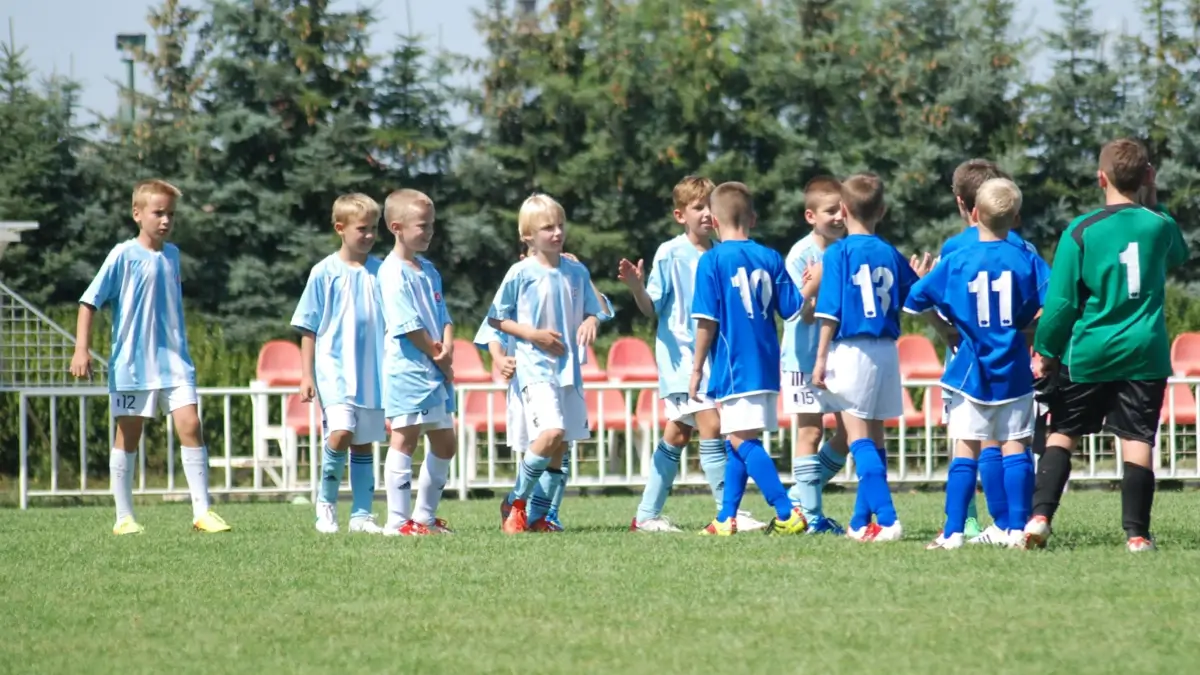
By Chris Smith, Executive Director, Toronto High Park FC
Parents who are new to youth soccer often hear terms such as U6, U10, or U14 and wonder what they actually mean. At first glance they can sound like league tiers or competitive levels. In reality, the letters simply refer to age groups.
The “U” stands for “Under.” A U10 team is made up of players who are under 10-years-old during that soccer season. A U14 team includes players who are under age 14.
This system is used across Canada and in most countries that offer youth soccer programs because it helps ensure children play with peers who are in roughly the same stage of physical and social development.
At the start of each season, I meet parents at their child’s first practice who hear these terms for the first time. Once the structure becomes clear to them, the rest of youth soccer suddenly makes much more sense.
Why Youth Soccer Uses the U-Age System
Youth sports are organized around development. Children grow quickly in coordination, strength, and decision-making between the ages of four and eighteen. A five-year-old learning basic balance is very different from a 15-year-old learning team tactics.
Grouping players by age keeps competition fair and allows coaches to focus on skills that match each stage of development.
Without these divisions, younger players would struggle against older and stronger opponents. The U-age structure helps create a safer and more effective learning environment.
Typical Youth Soccer Age Divisions in Canada
While exact divisions can vary slightly by region or club, most youth soccer programs in Canada follow a similar progression.
| Division | Typical Player Age | Main Development Focus |
| U5-7 | 4–6 years old | Basic movement, coordination, and fun |
| U8 & U9 | 7&8– years old | Movement, technical development, fun |
| U10 & U11 | 9 & 10 years old | Movement, technical development, fun |
| U12 & U13 | 11 & 12 years old | Technical development, decision making, teamwork, decision-making |
| U14 & U15 | 13 & 14 years old | Tactical awareness, game understanding, athletic development, mental preparation |
| U16 | 15 years old | Tactical awareness, game understanding, athletic development, mental toughness |
| U18 | 16–17 years old | Position specialization, technical refinement, preparing to win |
Each stage builds on the previous one. Younger players focus on basic coordination and ball control, while older players gradually develop tactical awareness and game strategy. It is also hugely important, particularly in the early years, to have a strong focus on falling in love with the game. This helps retain young players in the sport.
Parents who want a deeper explanation of how players improve at each stage can read this guide: [Internal link placeholder: How Kids Get Better at Soccer (By Age Group)].
How Team Sizes Change by Age
One of the first things parents notice is that young children do not play the 11 players versus 11 (known as “11v11”) version of soccer seen in teen and adult leagues.
Instead, youth leagues use smaller teams and smaller fields so players get more touches on the ball and stay involved in the play.
Typical formats in Canada include:
| Division | Typical Game Format |
| U8 & 9 | 5v5 |
| U10 & 11 | 7v7 |
| U12 & 13 | 9v9 |
| U14+ | 11v11 |
Smaller teams allow young players to interact with the ball more often. That increased involvement helps develop confidence and technical skills much faster than full-sized games would. Small-sided games also encourage more 1v1 situations and increase the number of attacking moments in the game, which are both key factors in long term player development for soccer.
Parents who want to understand how long these games usually last can see this guide:
[Internal link placeholder: How Long Does a Kids’ Soccer Game Last?]
How Birth Years Determine Eligibility
Many parents assume teams are organized strictly by a child’s birthday during the current season. In practice, most leagues use birth-year groupings.
Players born in the same calendar year are usually placed in the same age division. For example, children born in 2016 might play together in a U10 division depending on the league structure.
Using birth years helps leagues keep teams consistent throughout the season and prevents players from changing divisions mid-year after a birthday.
Most clubs publish an age chart before each season so parents can quickly see which division their child belongs in.
Recreational vs Competitive Youth Soccer
Another point that can confuse parents is the difference between recreational and competitive soccer programs.
Most children begin in recreational or house league programs, where the focus is participation, enjoyment, and basic skill development. These programs are generally run by community soccer clubs (like Toronto High Park FC) as opposed to league or district associations.
As players get older, some clubs offer competitive teams that train regularly (usually twice per week), play in an organized league and additionally, may travel for tournaments. These programs often involve tryouts to secure a spot on a team and require a higher level of commitment.
Both pathways can provide valuable experiences. Many players remain in recreational leagues for years while continuing to develop strong skills and friendships through the sport.
Parents who are new to youth soccer may also find it helpful to understand the basic equipment required for the game: [Internal link placeholder: What Equipment Is Needed for Kids’ Soccer?]
Canadian Youth Soccer Seasons
In most parts of Canada, youth soccer follows two main seasons.
The outdoor season usually runs from late spring through early fall. This is the primary soccer season for many clubs and leagues.
Many organizations also offer indoor programs during the winter months, often played in gymnasiums or indoor soccer facilities. These leagues help players maintain skills and stay active during colder weather.
However, as the game has grown in popularity over the last 10 to 15 years, it is commonplace for players to choose soccer as their No. 1 sport and play all year round, including during summer and winter months.
What New Soccer Parents Need to Know About Age Divisions
For parents entering youth soccer for the first time, the U-age system may feel confusing at first. After a month or two it becomes easy to follow.
A few points are worth remembering.
Age divisions are designed primarily for development rather than competition. The goal is to provide a learning environment suited to each stage of growth.
Players also develop at different speeds. A child who struggles during one season may improve dramatically the next as coordination and confidence increase. The development path is not linear.
Most importantly, enjoyment of the game remains the biggest factor in long-term improvement. Children who enjoy soccer and feel supported by coaches and parents are far more likely to continue playing and developing their skills.
Frequently Asked Questions: U Age System in Youth Soccer
The “U” stands for “Under.” A U12 team includes players who are under 12-years-old during that soccer season.
Age divisions allow children to compete with players in the same stage of development, which helps create fairer games and safer competition.
Yes, all sanctioned soccer in Canada has to follow the grassroots standards as set by Canada Soccer and provincial associations such as Ontario Soccer.
Clubs typically publish a birth-year chart each season showing which age group players are eligible for.
Smaller fields and smaller teams help young players stay involved in the game and develop skills more quickly.
Yes. The “Under” age classification is used internationally across youth soccer and many other sports.
Some clubs and leagues will allow players to play up a division. Coaches usually evaluate whether the player is ready physically and socially before making that decision.
Leagues will sometimes combine age divisions. This is more common in older age brackets. For example, once the players have competed in the U18 division they may jump to the U21 division.
No. Age groups determine eligibility, but competitive levels can vary within those divisions depending on the league or club structure. Most leagues will have different tiers of play within each age bracket.
No. Especially in younger divisions, the main focus is development, enjoyment, and learning the fundamentals of the game. Scores, standings and trophies are not a focus until the 11v11 game at U14.
Leave a Reply