Toronto High Park Soccer: Best High Park Soccer Programs for Kids

  • Toronto High Park Soccer: Best High Park Soccer Programs for Kids

    If you’re searching for Toronto High Park soccer programs for you kids, you’re not alone.

    Families across the west end of Toronto are looking for the best High Park soccer options for their kids, whether that means a beginner-friendly program, a competitive club, or a summer camp that keeps them active.

    The challenge isn’t finding soccer. It’s finding the right program before it fills up. Every season, registration opens quietly. Some programs fill within hours. Others are scattered across websites, emails, and word-of-mouth conversations. By the time many parents piece it together, the best-fit options are already gone.


    Find and compare rowing programs and clubs on the GoPlay platform. Registration is free. Visit: https://app.goplay.ai or click the button below


    High Park Soccer Programs in Toronto

    When parents search for High Park soccer, they’re usually looking for something close, reliable, and appropriate for their child’s age and ability.

    The good news is that High Park in Toronto and the surrounding Roncesvalles neighbourhood (and adjacent Kingsway and Bloor West Village communities) offer one of the strongest youth soccer ecosystems in Toronto.

    There are community clubs, private training programs, and seasonal camps, often within just a few kilometres. The challenge is visibility. Each program operates independently, which makes it harder to compare options or plan ahead.

    Soccer Programs Near High Park Worth Considering

    If you live in the nearby communities, here are the top Toronto High Park Soccer Clubs to help you choose the best program for your child. Click the club to scroll to its description.


    Toronto High Park FC

    A well-established option for keen and developing young players is Toronto High Park FC, a community-based, not-for-profit club serving west-end Toronto families.The club offers a clear progression from recreational soccer into structured development and competitive play.

    Location:

    3136 Dundas Street West, Toronto

    Programs:

    Toronto High Park FC offers:

    • Competitive soccer from U8 to U18
    • Ontario Player Development League (OPDL) programs for U13 to U17
    • Development programs for U8 to U13
    • U14+ competitive programs
    • Women’s competitive soccer
    • Indoor and outdoor recreational programs
    • All-abilities programming
    • Blind soccer
    • Summer soccer camps for 2026

    As one of only two Canada Soccer National Youth Club Licence holders in Toronto, the club provides a structured development pathway while maintaining a strong community focus.

    Signup to search in GoPlay, or click the button below, once registered, to go to the provider’s programs.


    Umoja Soccer School

    Founded by Coach Malam Mbarak, Umoja Soccer School focuses on building strong technical fundamentals first. The goal is to help kids develop confidence on the ball before progressing further. Programs run from early childhood through the mid-teens, with both recreational and competitive pathways.

    Location:

    Lamport Stadium, Toronto

    Programs:

    • Beginners developing core soccer skills
    • Experienced players refining technique
    • Competitive athletes seeking structured training
    • Kids building confidence through sport

    For families who want a fundamentals-first approach in a supportive environment, Umoja is a strong option.

    Signup to search in GoPlay, or click the button below, once registered, to go to the provider’s programs.


    Power Soccer

    For families looking for more focused skill development, Power Soccer is one of the most established training programs in Toronto. Founded in 1996, it emphasizes technical training and individual development, often used alongside club soccer.

    Locations:

    For High Park area families, the closest locations include:

    • Rennie Park (Bloor & Windermere)
    • Central Tech (Bloor & Bathurst)
    • Upper Canada College (St. Clair area)

    Programs:

    • Year-round soccer schools (ages 4+)
    • Summer camps and seasonal training
    • Private coaching and team training
    • Academy-level development (Power FC)

    The provider operates across its programs in more than 10 locations in Toronto.

    Signup to search in GoPlay, or click the button below, once registered, to go to the provider’s programs.


    UCC Junior Soccer Camp

    If you’re planning for summer, the Junior Soccer Camp at Upper Canada College (UCC) is a strong option for younger players. Designed for children ages 6 to 9, the camp blends skill development with a fun, structured daily format.

    Location:

    Upper Canada College, Upper School

    Programs:

    UCC Junior Soccer Camp programs include:

    • Weekly sessions (June 15 to August 21)
    • Skill development in dribbling, passing, and shooting
    • Small-sided games and scrimmages
    • A balance of instruction and play

    The program is a good fit for families looking for a structured summer activity that builds confidence while keeping kids engaged.

    Signup to search in GoPlay, or click the button below, once registered, to go to the provider’s programs.


    Little Kickers

    For younger children, Little Kickers is a preschool soccer program built around play, movement, and early development.

    The program started in 2002 when founder Christine Stanschus set out to create a fun, engaging soccer experience for her young son. It has since grown into one of the largest preschool soccer programs in the world, with classes running in multiple countries.

    What makes Little Kickers different is its focus on how young kids learn. Sessions combine basic soccer skills like kicking and dribbling with imaginative play and early development concepts such as listening, sharing, and teamwork.

    You can see details and upcoming programs on GoPlay.

    Programs:

    The company structures its programs by age, which helps kids progress naturally:

    • Little Kicks (18 months to 2½ years) – parent-and-child classes focused on movement and early coordination
    • Junior Kickers (2½ to 3½ years) – introduction to simple soccer concepts through play
    • Mighty Kickers (3½ to 5 years) – more structured sessions with basic skills and small games
    • Mega Kickers (5 years to 8th birthday) – early skill development with a transition toward real gameplay

    Little Kickers is a strong fit for:

    • Preschoolers trying soccer for the first time
    • Younger kids who benefit from structure without pressure
    • Families looking for a fun, social weekly activity
    • Children building confidence, coordination, and basic athletic skills

    For High Park families, this type of program often works best as a first introduction to soccer before moving into more traditional leagues or clubs.

    Locations:

    Locations closest to Toronto High Park are as follows:

    • Sorauren Avenue Park (289 Sorauren Ave)
    • Roncesvalles United Church (214 Wright Ave)
    • High Park / Bloor West (1873 Bloor St W)
    • Shirley Street School (38 Shirley St)
    • St. Helen’s School (1196 College St)
    • Lithuania Park (155 Oakmount Rd)
    • Rennie Park (1 Rennie Terrace)

    Little Kickers is worth considering if your child is not ready for a traditional league but would benefit from a fun, structured first step into soccer.

    Signup to search in GoPlay, or click the button below, once registered, to go to the provider’s programs.


    Sport Ball

    For younger children who aren’t ready to commit to just one sport, Sportball offers a different approach.

    Instead of focusing only on soccer, Sportball’s Multi-Sport program gives kids the chance to try a range of activities, including soccer, baseball, basketball, football, hockey, volleyball, golf, and tennis. The idea is simple. Let kids explore, stay active, and figure out what they enjoy.

    Soccer is still a core part of the experience. Sessions are designed to introduce basic skills like kicking, movement, and coordination, but they’re taught through imaginative, play-based games that keep kids engaged.

    Programs are designed for a wide age range, starting as young as 16 months and continuing through age 12, with small group sizes and certified coaches leading each session.

    Sportball offers:

    • Multi-sport classes that include soccer as part of the rotation
    • Play-based skill development focused on movement and coordination
    • Small-group sessions (typically 6 to 16 children)
    • Classes for toddlers through pre-teens
    • All equipment provided

    For parents near High Park, Sportball is often a good fit if your child is still exploring different activities or needs a lower-pressure introduction to organized sports before moving into a dedicated soccer program.

    You can see details and upcoming programs on

    Locations near High Park and area:

    • Sorauren Park
    • Trinity Bellwoods Park
    • Rennie Park
    • Hillcrest Park
    • Jeff Healey Park
    • Cedarvale Park

    Programs:

    Sportball programs in the High Park area are primarily structured as soccer and multi-sport sessions, often combined with T-ball for younger children.

    Most locations offer:

    • Early elementary programs (ages 5 to 8) with more structured play, small games, and teamwork
    • Parent & Child programs (ages ~2 to 3) focused on basic movement, coordination, and early participation
    • Preschool programs (ages 3 to 5) introducing soccer skills through simple games and repetition

    Signup to search in GoPlay, or click the button below, once registered, to go to the provider’s programs.


    Etobicoke FC

    Etobicoke Football Club (Etobicoke FC) is one of the largest and most established youth soccer organizations in Toronto’s west end, serving players from early childhood through competitive levels.

    The club offers a full pathway that includes grassroots programs, house league play, and competitive teams aligned with Ontario Soccer standards. Its focus is on long-term player development, combining structured coaching, community participation, and opportunities for advancement as players grow. The provider offers a traditional club model, where kids can start recreationally and progress into more competitive environments.

    Location:

    86 Montgomery Rd, Etobicoke

    Programs:

    • Grassroots Program U8-13
    • Competitive Program U14+
    • Soccer School
    • Goalkeeping Program
    • High Performance Program U11+
    • Skills Centre
    • Tier Programs

    Signup to search in GoPlay, or click the button below, once registered, to go to the provider’s programs.


    City of Toronto Soccer Programs Near High Park

    In addition to clubs and private programs, the City of Toronto offers soccer programs that are often more affordable and beginner-friendly. These programs are typically instructional or house league formats, making them a good option for younger players or families looking for a lower-commitment schedule. Some of the closest locations to High Park include:

    • Sorauren Avenue Park
    • Humbercrest Public School
    • S.H. Armstrong Community Recreation Centre
    • Keele Community Centre
    • Dennis R. Timbrell Resource Centre

    City programs usually focus on basic skills, participation, and short seasonal sessions. They’re accessible and practical, but spots can fill quickly once registration opens.

    How to Choose the Right High Park Soccer Program

    The biggest mistake parents make is choosing based on availability instead of fit. Some kids benefit from a relaxed, social environment where they can simply enjoy the game. Others thrive with more structure, repetition, and development. Some are ready for competitive play earlier than expected. There isn’t one right path. What matters is being able to compare your options and make a decision that works for your child and your schedule.

    A Smarter Way to Find Toronto High Park Soccer

    Once you can see your options clearly, everything changes. You can compare programs, understand schedules, and plan across multiple kids without relying on scattered information. Instead of reacting to deadlines, you’re planning ahead.

    If you’re currently looking for Toronto High Park soccer, you can explore local programs here: https://app.goplay.ai

    What Most Parents Realize Too Late

    After a season or two, most parents come to the same conclusion. They don’t need more options. They need a better way to organize them. Once that’s in place, everything becomes easier. Registration feels manageable. Scheduling becomes predictable. And choosing the right activity becomes a decision, not a scramble.


    Find and compare rowing programs and clubs on the GoPlay platform. Registration is free. Visit: https://app.goplay.ai or click the button below


    FAQ: High Park Soccer

    Here are the most common questions about Toronto High Park soccer.

    When does High Park soccer registration open?

    Most High Park soccer programs open registration between January and April, depending on the organization.

    Community clubs and competitive programs often open earlier, sometimes as early as January, while City of Toronto programs typically open closer to March or April.

    The important part is this: many of the most popular programs fill within days, sometimes hours. If you wait until spring to start looking, you may already be choosing from limited options.

    A good rule is to start checking availability right after the new year, especially for summer and outdoor seasons. Register for free to search for soccer programs on GoPlay.

    What age can kids start soccer in Toronto?

    Most programs in the High Park area start at age 3 or 4, usually with short, play-based sessions that focus on movement, coordination, and basic ball skills.

    By age 5 or 6, programs become more structured, with simple drills and small-sided games. Around ages 7 to 9, you’ll start to see more defined teams and game play.

    If your child is new to soccer, starting earlier can help with confidence, but it’s never too late to begin.

    You can learn more about soccer levels and related ages in this U-Age System post.

    Are there beginner friendly programs near High Park?

    Yes, there are several. The City of Toronto programs and recreational leagues are typically the most beginner-friendly. They focus on participation, basic skills, and fun rather than performance. Programs like Umoja Soccer School also work well for beginners because they emphasize fundamentals and individual development rather than competition. If your child is unsure about soccer, these environments tend to be the best first step.

    What’s the difference between recreational and competitive soccer?

    Recreational soccer is designed to be low-pressure. Kids are placed on teams, play weekly games, and focus on learning and enjoying the sport.
    Competitive soccer usually requires a tryout and involves more structured training, multiple weekly sessions, and a longer-term commitment. There’s more emphasis on skill development, teamwork, and performance.
    For most families, the progression is natural. Kids start recreationally, and if they show interest and enjoyment, they move into more competitive environments over time.

    How can I avoid missing registration?

    This is where most parents struggle, and it’s rarely because they’re not paying attention. The issue is that information is scattered. Programs open at different times, announcements come through different channels, and it’s easy to miss something.

    The most reliable approach is to:
    -Start looking earlier than you think you need to
    -Check multiple programs at the same time instead of one by one
    -Keep track of key dates in one place

    If you rely only on emails or word-of-mouth, you’ll almost always hear about things after they’ve filled. Start you search in our platform to ensure you don’t miss the latest high park soccer programs

    Where can I learn more about soccer basics

    Check out our parents guide to kids soccer to learn about how to game is configured for kids, as well as skills development by age, game length, and more.

  • How Long Does a Kids’ Soccer Game Last in Canada? Game Length By Age Group


    When parents sign their child up for soccer for the first time, one of the first practical questions is about time. How long will the game last? Will it take the whole morning? Is it like professional soccer where the match runs 90 minutes?

    The answer depends on the age of the players and the program or league they are participating in. Youth soccer in Canada is structured so that games gradually increase in length as children grow older and stronger. Younger players play shorter matches on smaller fields, while teenagers eventually move toward the full game format used in adult soccer.

    As a coach who has worked with youth teams for many years, I often tell parents that the length of a game is designed to grow with the player (i.e. the older the player becomes the longer the game will last).The goal is not to exhaust young players. The goal is to keep them active, learning, and enjoying the game.

    Understanding how game length changes by age group helps parents know what to expect and helps explain how youth soccer development works in Canada.

    If you’re just getting started or trying to make sense of how everything fits together, it helps to understand how youth soccer is structured across Canada. From age group systems and skill development to competitive pathways and what to expect as a parent, there’s a bigger picture behind each local program. You can explore our complete guide to youth soccer in Canada for a clear breakdown of how it all works, along with answers to common questions parents have as their children move through the sport.

    Understanding the “U” Age Groups in Youth Soccer

    Before looking at game length, it helps to understand the age group system used in Canadian youth soccer.

    Most leagues organize teams using labels such as U7, U9, or U13. The “U” stands for “Under.”

    A U9 team, for example, means players who are under nine years old during that soccer season.

    Canada Soccer and most provincial associations organize youth soccer based on birth year so players compete with others at a similar stage of physical development.

    For parents new to the sport, the system can feel confusing at first. The simplest way to think about it is that the number represents the maximum age in that division.

    Age GroupWhat It Means
    U6Players aged 5 and under
    U8Players aged 7 and under
    U10Players aged 9 and under
    U12Players aged 11 and under
    U14Players aged 13 and under
    U16Players aged 15 and under
    U18Players aged 17 and under

    Once you understand the age structure, the progression of game length begins to make sense.

    Typical Length of Kids’ Soccer Games in Canada

    Youth soccer games gradually increase in length as players move into older divisions. While leagues may adjust slightly, most follow a structure similar to the one below. The game lengths below are typical for summer season soccer, however in the winter season in Ontario most game from U10-U13 are 50 minutes with U14+ games running for 80mins. 

    Age GroupTypical Game LengthGame FormatNotes
    U8&940 minutes5v5Introduction to teamwork
    U10&1150 minutes7v7Passing and spacing develop
    U1–U12 &1370 minutes9v9Larger field and more tactics
    U14+80 minutes11v11Transition to full game
    U15–U1880–90 minutes11v11Close to adult match length

    Games are normally split into two halves with a short halftime break. Younger age groups may have halves as short as 15 or 20 minutes, while older youth teams often play halves of 35 to 45 minutes.

    It’s also worth noting that some development leagues may opt for three or four periods as opposed to two halves. 

    Early Soccer Years: Ages U4 to U7

    In this age bracket players are more likely to attend training sessions as opposed to playing games.

    Some large community clubs may offer internal house league games and if they do they would be no more than 40-50 minutes. 

    Games are played with very small teams, often three or four players per side, and there are usually no goalkeepers.

    At this age the goal is not tactics or competition. It is movement, coordination, and learning how to interact with teammates.

    Every season I tell new parents the same thing during the first practice. For the first few weeks, the game will look like a swarm of bees chasing the ball. That is completely normal. Kids gradually learn spacing and teamwork as they become more comfortable on the field.

    Developing Players: Ages  U8 and U9 

    Once players reach U8 and U9 divisions (ages 7 and 8), the game begins to look more structured.

    Matches are usually 40 minutes long, played as two 20-minute halves. Teams typically play five-a-side, which gives players more room to move and more opportunities to touch the ball.

    By the time children reach U10 and U11 (ages 9 and 10), the format expands to seven players per side, and games typically last 50 minutes.

    This is when many young players begin to understand positions and basic team play. Coaches introduce simple ideas about spacing, passing, and defending, but the emphasis should still remain on development rather than winning.

    Parents sometimes worry about whether their child is “good enough” at this stage. My advice is always the same. If they are smiling when they leave the field, they are exactly where they should be.

    Pre-Teen Soccer: Ages U12 and U13

    At the U12 and U13 level (pre-teens), games increase to about 70 minutes, usually played as two 35-minute halves.

    Teams move to a nine-versus-nine format, and the field becomes noticeably larger. Players at this age begin to show stronger endurance and a better understanding of the game. Passing combinations, defensive positioning, and team shape start to appear more consistently.

    From a coaching perspective, this stage is where soccer often becomes more recognizable to parents who have watched professional matches.

    Teen Soccer: Ages U14 and U15-U18

    Once players reach the U14 level (12 or 13 year olds ), youth soccer transitions to the traditional 11-versus-11 format on a full-size field.

    Games typically last 80-90 minutes for U14 teams, divided into two 40-minute halves.

    Older youth divisions, especially U15 through U18 (teens), often play matches lasting up to 90 minutes, depending on the league.

    By this stage the game resembles adult soccer in both pace and strategy. Players cover more ground, teams use more tactical systems, and fitness becomes increasingly important.

    For many teenagers, this is also the stage where competitive travel teams and higher-level leagues become an option.

    Things That Surprise New Soccer Parents

    Families who are new to youth soccer often discover a few things that are different from what they expected.

    One common surprise is that game time is not the same as total time at the field. Even if the match lasts 50 minutes, teams usually arrive 15 to 20 minutes early for warm-ups.

    After the game there is often a quick coach talk and a handshake line. In practice, families should expect to spend about 75 to 90 minutes at the field.

    Another surprise is how substitutions work. In most youth leagues, substitutions are unlimited and players can re-enter the game multiple times. This allows coaches to rotate players so everyone gets playing time and a chance to rest.

    Parents are also often caught off-guard when rain doesn’t stop or cancel soccer games. Unless there is lightning or the field becomes unsafe, games usually continue in light rain. Kids often enjoy those muddy matches more than any other.

    Finally, many parents expect every soccer field to be the same size. Youth fields are actually scaled to the age of the players. Younger divisions play on much smaller fields so that children stay involved and get more touches on the ball.

    Why Shorter Games Help Kids Learn Faster

    Parents sometimes assume longer games would help players improve more quickly.

    In reality, shorter games are better for young athletes. Children who are tired stop making good decisions. Their passing becomes sloppy, their positioning breaks down, and the game becomes frustrating.

    Shorter matches keep players engaged and active. When kids stay involved in the play, they touch the ball more often and develop skills faster. That is why youth soccer programs across Canada use a gradual progression of match length rather than pushing children into the full game too early.

    See also:


    Frequently Asked Questions

    Frequently asked questions about soccer game length in youth soccer.

    How long is halftime in kids’ soccer games?

    Halftime in youth soccer is usually between five and ten minutes depending on the age group. Younger divisions often have shorter halftime breaks because the games themselves are shorter. In some development leagues games may be played across three periods or four quarters to assist with appropriate playing time and to provide the coaching staff with more opportunities to speak to the players. 

    Do youth soccer games stop the clock for injuries?

    Most recreational leagues do not stop the clock unless the injury is serious. The referee may pause play briefly, but extra time is rarely added in younger divisions.

    How early should families arrive before kickoff?

    Teams typically arrive 15 to 20 minutes before the game. This allows time for warm-ups, equipment checks, and quick instructions from the coach. Teams may have their own rules around this so it’s worth checking in with the team and coach beforehand.

    Why do younger kids play with fewer players and on smaller fields? 

    The general idea is that the game should grow with the player. When they first start out at U8/9 they play 5v5 soccer, on a small field, with simplified rules. As they get older, the field size increases, the number of players playing increases and the rules become a bit more complex. Small-sided soccer allows children to touch the ball more often and stay involved in the play. Development research shows that players learn faster when they participate more actively.

    Do youth soccer leagues keep score for younger players?

    Many recreational leagues for younger age groups do not keep official scores or standings. The emphasis is on development and enjoyment rather than competition. In Canada, scores and standings come into play when the players reach the U14 age group. 

    Are tournament games shorter than regular youth soccer games?

    Yes. Youth soccer tournaments often shorten matches so teams can play multiple games in a single day.

    Do youth soccer games ever go into overtime?

    Most regular season youth games end when time expires even if the score is tied. Extra time is usually only used in tournament finals or playoff games.

    How many games are in a typical youth soccer season?

    Recreational leagues in Canada can schedule anywhere between eight to 20 games in a season. Competitive teams may play more matches and participate in tournaments.

    When do players start playing full 90-minute matches?

    Players usually reach the full 90-minute game format in older youth divisions starting at either U15 or U16. Recreational leagues may keep games slightly shorter.

  • Complete Guide to Kids Soccer in Canada

    Soccer is one of the most accessible and widely played sports for children in Canada. Every year, hundreds of thousands of kids join local clubs, school programs, and community leagues. For parents, especially those new to the sport, the structure can feel unclear at first.

    This guide brings everything together in one place. It explains how youth soccer works in Canada, what your child needs to get started, how development progresses by age, and what to expect as your child grows in the game.

    If you are just getting started, this guide will help.


    How Youth Soccer Is Structured in Canada

    Most children in Canada play soccer through local clubs that operate under provincial associations and Canada Soccer. While the experience can vary slightly by region, the overall structure is consistent across the country.

    Programs are typically divided into three levels, each with a different level of commitment and focus.

    Before choosing a program, it helps to understand what each level involves.

    • Recreational soccer This is where most children begin. The focus is on participation, enjoyment, and basic skill development. Practices are usually once per week, with games on weekends.
    • Development or academy programs These offer more structured training with an emphasis on technical skills. Sessions are more frequent, and coaching is often more formalized.
    • Competitive or rep teams These teams require tryouts and involve a higher level of commitment. Travel, multiple weekly practices, and tournament play are common.

    If you are unsure where to start, recreational soccer is almost always the right entry point.

    If you are locarted in Toronto, you can search soccer programs for your children. Here, for example are kids soccer programs near Toronto High Park and area or sign up to GoPlay for free to search based on location, program availability and more.


    Understanding Age Groups in Canadian Soccer

    One of the first things parents notice is the use of labels like U6, U10, or U14. These are not skill levels or divisions. They simply refer to age groups.

    The “U” stands for “Under,” meaning players are grouped by the maximum age they can be during that season.

    If you are unfamiliar with how this system works, see our guide to Understanding Soccer Age Groups in Canada.

    Knowing your child’s age group helps you understand what kind of coaching, game format, and expectations are appropriate at each stage.

    This is used by coaches and leagues to place kids at the best level for their age. It is a good idea to understand which U-Age level your son or daughter is at. Find out in the article below:

    Learn more about the U-Age system in Canadian youth soccer


    How Kids Improve at Soccer Over Time

    Children do not improve at soccer through shortcuts. Development happens gradually, and it looks very different depending on age.

    A younger child is learning coordination and basic ball control, while an older player is working on positioning, teamwork, and decision-making.

    If you want a clear breakdown of what matters at each stage, see How kids improve at soccer by age. Parents who understand these stages tend to make better decisions about training, expectations, and long-term involvement.


    What Equipment Your Child Needs

    One of the advantages of soccer is how simple it is to get started. Compared to many other sports, the equipment requirements are minimal.

    Most leagues require only a few basic items. Before buying anything, it helps to understand what is essential and what is optional. See: What equipment your child needs for soccer for a practical breakdown.

    One of the most common purchases is footwear. If you are unsure what to look for, read: How to choose the right soccer cleats for kids.

    Avoid overbuying early. Comfort, fit, and safety matter more than brand or price.


    Indoor vs Outdoor Soccer in Canada

    Because of Canada’s climate, with four distinct seasons, many children play soccer year-round at both indoor and outdoor facilities. 

    Each format offers a slightly different experience.

    • Outdoor soccer Played in spring and summer on larger fields, often with more players per team.
    • Indoor soccer or futsal Played in fall and winter, typically on smaller surfaces with faster gameplay and more frequent ball touches.

    Indoor soccer is often recommended during the off-season because it encourages technical development.


    How Long Games Last by Age

    Game length varies depending on your child’s age group and level of play. Younger children play shorter games with simplified rules, while older players gradually move toward full match formats.

    If you want a detailed breakdown, see how long kids soccer games last in Canada.

    Understanding game structure helps set realistic expectations for both players and parents.


    Costs of Kids Soccer in Canada

    The cost of youth soccer can vary widely depending on the level of play, the club, and your location.

    Recreational programs are generally affordable, while competitive soccer can involve higher fees due to travel, training, and tournaments.

    In addition to registration fees, parents should also consider equipment, uniforms, and optional extras.

    Financial assistance programs such as KidSport Canada and Jumpstart are available to help families offset costs where needed.


    How to Choose the Right Soccer Program for Your Child

    Not all soccer programs offer the same experience. Coaching quality, organization, and philosophy can vary significantly between clubs.

    When evaluating a program, it helps to look at a few key factors.

    • Coaching qualifications and approach
    • Focus on development versus winning
    • Communication with parents
    • Practice and game schedules
    • Travel expectations

    A strong program will prioritize development, enjoyment, and inclusion, especially in the early years.

    You can review soccer providers in the Toronto area on the GoPlay.ai platform. The site will be adding local providers in 2026 and beyond as new neighbourhoods are rolled out. Registration for parents is free at https://app.goplay.ai.


    How Parents Can Support Their Child

    Parental involvement plays a major role in whether children enjoy soccer and continue playing over time.

    The most effective support is often the simplest.

    • Focus on effort rather than results
    • Allow coaches to lead during games and practices
    • Avoid sideline pressure or criticism
    • Encourage consistency and enjoyment

    Children who feel supported tend to develop more confidence and stay engaged longer.


    Where Soccer Can Lead

    As children grow, their path in soccer can take different directions. Some continue recreationally, while others move into competitive programs or school teams.

    There are also opportunities beyond playing, including refereeing, coaching, and leadership roles within clubs.

    Not every child will pursue soccer seriously, and that is completely fine. The goal is to build a positive and lasting experience with sport.


    Related Guides for Parents

    If you want to go deeper into specific topics, these guides expand on key areas of youth soccer in Canada.


    Common Questions About Kids Soccer in Canada

    What age can kids start playing soccer in Canada?

    Most children in Canada can begin soccer as early as age 3 or 4 through introductory programs often called Active Start. At this stage, the focus is not on structured games or competition. Instead, children work on basic movement skills such as running, balance, coordination, and simple interaction with the ball.

    These early programs are designed to build comfort and confidence rather than technical ability. If your child is enjoying being active and participating, they are getting exactly what they need at this age.

    What does U7 or U10 mean in soccer?

    The “U” stands for “Under,” meaning players are grouped based on being under a certain age during the season. For example, U10 refers to players who are under 10 years old for that soccer year.

    This system is used across Canada to ensure children are playing with others at a similar stage of physical and social development. It also helps guide coaching methods and game formats. If you want a full breakdown, see understanding soccer age groups in Canada.

    How long is a kids soccer season in Canada?

    Outdoor soccer typically runs from May through September, depending on the province and weather. Indoor soccer or futsal programs usually run from October through March.

    Many families choose to participate in both seasons, which allows children to play and develop year-round. The structure and intensity may vary, but this seasonal cycle is common across most Canadian clubs.

    How long are kids soccer games?

    Game length increases gradually as children get older. Younger age groups may play short games of 20 to 40 minutes, often with simplified rules and smaller teams.

    As players move into older age groups, game length increases to 60 minutes or more, eventually reaching full match length at the highest youth levels. For a detailed breakdown by age, see how long kids soccer games last in Canada.

    Is soccer expensive for kids in Canada?

    Soccer is generally more affordable than many other organized sports, but costs can still vary significantly depending on the level of play. Recreational programs are usually budget-friendly, while competitive programs can become more expensive due to travel, coaching, and tournament participation.

    You can find out more and browse pricing for soccer clubs and leagues in the Toronto area by accessing GoPlay’s growing list of soccer providers in Toronto. Registration is free.

    Families should also consider additional costs such as uniforms, equipment, and optional training programs. If cost is a concern, organizations such as KidSport Canada and Jumpstart offer financial assistance.

    What equipment does my child need for soccer?

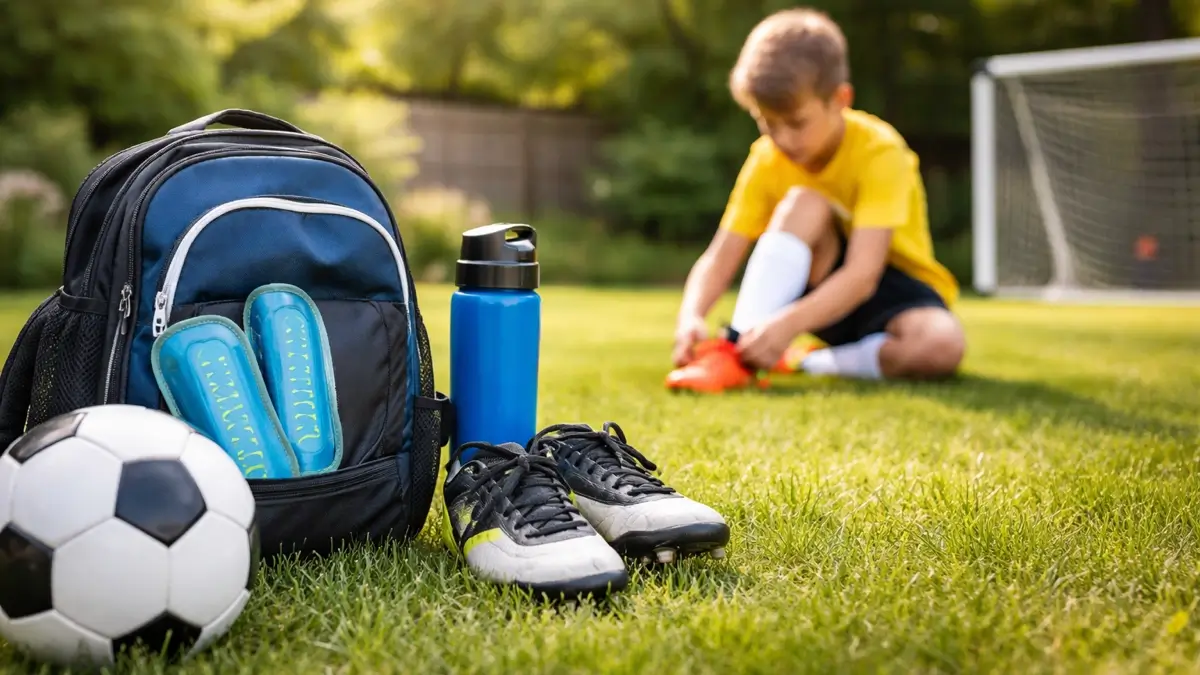
    The basic equipment required for youth soccer is simple. Most leagues require cleats, shin guards, and comfortable athletic clothing or a team uniform.
    Additional items such as a properly sized soccer ball and water bottle are strongly recommended for practices. For a complete breakdown of required and optional gear, see what equipment your child needs for soccer.

    Do kids need soccer cleats right away?

    Cleats are highly recommended for traction and safety, especially on grass fields, but they may not be required for very young children in beginner programs. Check with your local club or league for their policy. For children just starting out, comfort and proper fit are more important than brand or style. When you are ready to buy, see how to choose the right soccer cleats for kids.

    How can I help my child get better at soccer?

    The most effective way for children to improve is through consistent time with the ball. This includes both structured practice and informal play at home or in the park.
    Encouragement, patience, and allowing children to enjoy the game are just as important as technical training. For age-specific guidance, see how kids improve at soccer by age.

    Should my child play recreational or competitive soccer?

    Recreational soccer is the best starting point for most children, especially those who are new to the game. It provides a low-pressure environment focused on learning and enjoyment.
    Competitive soccer involves tryouts, higher expectations, and a greater time commitment. It may be appropriate for children who show strong interest and readiness, but it is not necessary for long-term development.

    Is indoor soccer better than outdoor soccer?

    Indoor and outdoor soccer each offer different benefits. Outdoor soccer allows for more space, positioning, and traditional gameplay. Indoor soccer, often played on smaller surfaces, leads to more frequent ball touches and faster decision-making.
    Many coaches recommend a combination of both formats to support balanced development.

    Can my child start soccer with no experience?

    Yes. Most youth soccer programs, especially at the recreational level, are designed for beginners. Coaches expect that many children will be learning the game for the first time.
    Programs are structured to introduce basic skills gradually, so prior experience is not necessary for children to participate and enjoy the sport.

    How many days a week is kids soccer?

    Recreational soccer typically involves one practice and one game per week. This schedule allows children to participate without becoming overwhelmed.
    Competitive programs often require multiple practices per week, along with games and occasional tournaments. The time commitment increases as the level of play becomes more advanced.

    Do kids need to try out for soccer in Canada?

    Tryouts are only required for competitive or representative teams. These teams select players based on skill level and potential.
    Recreational programs are usually open registration, meaning any child can join without evaluation. This makes them accessible for beginners and those who want a more relaxed experience.

    What size soccer ball does my child need?

    Soccer ball size is determined by age group. Younger children use smaller balls to help with control and coordination, while older players transition to full-size balls.
    Using the correct ball size is important for development, as it allows children to practice proper technique more effectively.

    Is soccer safe for young children?

    Soccer is generally considered a safe sport, especially at younger ages where physical contact is limited. Most leagues require shin guards and follow rules designed to reduce injury risk. Parents should ensure children are properly equipped and encourage good habits such as warming up and staying hydrated.

    What should kids wear to soccer practice?

    Children should wear comfortable athletic clothing that allows for movement. Shin guards are required in most leagues, and cleats are recommended for outdoor play.
    In colder weather, layering is important, especially in Canada where early spring and fall practices can be chilly.

    How do I choose the right soccer club for my child?

    Choosing a club involves more than location or cost. Parents should consider coaching quality, communication, program structure, and overall philosophy.
    A strong club will focus on development and enjoyment, especially in younger age groups, rather than emphasizing winning at all costs.

    See our guide to choosing a kids activities provider (coming soon).

    What is the best age to start competitive soccer?

    Many children begin transitioning to competitive soccer between ages 10 and 13, but there is no fixed timeline. Readiness depends on interest, skill development, and willingness to commit more time.
    Starting competitive soccer too early is not necessary and can sometimes reduce long-term enjoyment of the sport.

    Can my child play soccer year-round in Canada?

    Yes. Many children play outdoor soccer in the warmer months and indoor soccer during the winter (especially in Canadan cities). This allows for continuous development and keeps skills sharp throughout the year. Year-round participation is common but should be balanced with rest and other activities.

    What are the benefits of soccer for kids?

    Soccer supports physical fitness, coordination, and endurance, while also helping children develop teamwork, confidence, and discipline.
    It is also one of the most accessible sports, making it a strong choice for children of all skill levels and backgrounds.


  • What Equipment Is Needed for Kids’ Soccer?

    Parents whose children are starting soccer for the first time often assume the sport requires a long list of gear. In reality, youth soccer is intentionally simple. Around the world, children learn the game with very little equipment. Organized leagues add a few safety requirements, but compared with sports like hockey, football, or baseball, the equipment list is refreshingly short.

    From a coaching standpoint, the goal is not to load young players down with gear. The goal is to give them what they need to stay safe and comfortable so they can focus on learning the game.

    After years around youth soccer fields, the pattern is consistent. The players who improve the most are not the ones with the most equipment. They are the ones who spend the most time with the ball.

    That said, there are a handful of items every young player should have before the first practice. Understanding what matters and what does not will save parents money and help children start the season confident and prepared.

    If you’re just getting started or trying to make sense of how everything fits together, it helps to understand how youth soccer is structured across Canada. You can explore our complete guide to youth soccer in Canada for a clear breakdown of how it all works, along with answers to common questions parents have as their children move through the sport.

    Below is a practical guide to the equipment kids actually need for soccer, along with a few extras that can make practices easier.

    Core Equipment Every Youth Soccer Player Needs

    Most youth leagues require only a few basic items. These pieces of equipment cover safety requirements and allow players to participate fully in practices and games. Parents should start with these essentials before considering anything else.

    Soccer Ball

    Every young player should have their own soccer ball. Even when teams provide balls for games, having a personal ball makes a major difference in skill development. Players who regularly touch the ball outside of organized practices improve far faster than those who only see the ball during scheduled sessions.

    This is something we coaches notice immediately. A child who spends time kicking the ball around in the driveway or backyard will develop better technical skills compared to those players who do not practice in their own time. 

    Youth soccer balls come in different sizes depending on age. Using the correct size matters more than most parents realize. A ball that is too large can make it difficult for younger players to control passes, dribble effectively, or strike the ball properly.

    Most leagues follow these general guidelines:

    • Size 3: Ages 7 and under
    • Size 4: Ages 8 to 11
    • Size 5: Ages 12 and older

    Parents should look for a durable training ball made from synthetic leather. They are designed for regular use and will hold up well on grass, pavement, or artificial turf.

    Soccer Cleats

    Arguably, the second critical piece of equipment for any soccer player, beginner or accomplished,  is a pair of well-fitting soccer cleats.  This footwear has studs on the sole allowing players to accelerate, stop, and change direction without slipping on grass and turf fields. 

    It might seem as though running shoes might be a reasonable substitute, but they lack the grip needed for quick and abrupt soccer movements. When players cut or turn quickly in running shoes, slipping becomes a real risk, and can result in injury.

    For younger players, molded plastic studs are the safest and most common choice. These cleats work well on most outdoor fields and are widely accepted in youth leagues. 

    You might wonder if a pair of expensive cleats are necessary. They are not. What matters most is fit. Cleats should feel snug around the foot without squeezing the toes. There should be a small amount of room at the front of the shoe, so the toes are not jammed when the player stops suddenly.

    As a coach, I have often witnessed my young players running in a new pair of cleats that are too large for their feet.  Moms and dads sometimes buy larger sizes than are needed in the hopes their soccer player will grow into them and possibly get more than a year out of them before their feet get too big as they grow. The problem is oversized cleats can cause the foot to slide inside the shoe, which makes execution of technical skills difficult and increases the chance of tripping.

    So a word to the wise: Buying the correct size is far more important than buying a premium brand.

    Also see our guide on soccer cleats for kids.

    Shin Guards

    Shin guards are mandatory in almost every organized youth soccer league. They protect the lower leg from accidental kicks when players challenge each other for the ball. Even in recreational leagues where tackling is limited, collisions happen frequently enough that shin protection is essential.

    Most youth players use slip-in shin guards that slide inside the soccer socks. These are lightweight, comfortable, and provide solid protection for the shin bone. When choosing shin guards, parents should make sure they provide proper coverage. The guard should extend from just below the knee to above the ankle. If the guard is too short, it leaves part of the shin exposed and susceptible to injury.

    Guards also need to stay secure during play. Loose guards can slide down inside the sock and they become distracting to the player and they also lose much of their protective value.

    Soccer Socks

    Soccer socks serve a practical purpose beyond matching the team uniform. As above, they need to be long enough to cover shin guards and hold them in place during games and practices. Most guards extend to the knee and are designed to stretch comfortably over shin protection.

    Many players wear a thin athletic sock underneath the soccer sock to reduce friction inside the cleat. This is optional, but some players find it more comfortable during longer games. Most teams require socks in specific colours that match the uniform. Parents quickly learn it is wise to keep an extra pair in the gear bag, especially during wet or muddy games.

    Uniform (Jersey and Shorts)

    Uniform requirements can vary from program to program, and club to club. Recreational programs may not require any kind of specific uniform which would allow players to wear whatever they like to play, however some programs may like to provide a partial uniform i.e. a jersey. 

    If your son/daughter is playing in a district or provincial league then a full uniform (socks, shorts and jersey) will be required. Generally speaking, the club/team you are playing with will provide the information you need regarding uniforms and how they are to be worn during the season. At this level each team is likely to have two different colours to prevent conflicts with other teams when it comes to match day. 

    Be sure to check with your child’s club or league before purchasing uniform items, as requirements can vary between organizations.

    Practical Equipment That Makes Soccer Easier

    Once the essentials are covered, a few additional items can make life easier for players and parents. These are not mandatory, but they are commonly used by young players.

    Water Bottle

    Soccer involves constant movement and running. Staying hydrated is essential, particularly during warmer months. So we always recommend that every player bring a water bottle to practice and games. Most teams ask players to label their bottles with their name to avoid mix-ups on the sidelines. A piece of heavy duty colored tape with a name written on it with a waterproof marker is ideal. Some write directly on the bottle itself. 

    Soccer Bag or Backpack

    A simple soccer backpack helps players keep everything together. Experienced parents know that forgotten shin guards or cleats can quickly turn a normal practice into a stressful scramble. Many soccer bags include ventilated compartments designed specifically for cleats, which prevents muddy shoes from soaking the rest of the gear. During the late spring or after any rainy practices or games, this feature is very much appreciated by parents. 

    Practice Cones

    Training cones are one of the simplest tools for helping kids practice soccer skills at home. A small set allows players to set up dribbling courses, passing targets, or shooting drills in a backyard or local park. The best youth players often develop their ball control through informal practice outside of team sessions. Even ten minutes of dribbling around cones can make a noticeable difference over time and help a novice player become proficient quickly.

    Optional Equipment Some Players Enjoy

    As children become more involved in soccer, they sometimes add extra equipment to support their training. These items are not required for the little kids or novices, but they are commonly used by enthusiastic players.

    • Portable soccer goals are one example. Small goals make it easier for kids to practice shooting and passing at home. They are lightweight and easy to move between backyard and park.
    • Training bibs, often called pinnies, are another optional item. These lightweight vests are used to divide players into teams during small-sided games.
    • Cold-weather gear can also be helpful in Canadian climates. Lightweight gloves, base layers, and neck warmers allow players to stay comfortable during early spring or late fall seasons.

    Equipment Advice We Give Parents Every Season

    Spend a few years around youth soccer fields and you will hear the same conversations repeated each season.

    I see parents of novice players often arrive worried they might have forgotten something important. The commitment is appreciated!

    Here’s what I tell them: 

    1. Keep it simple. Kids do not need expensive gear to learn soccer. What they need is equipment that fits properly and allows them to move comfortably.
    2. Bring a ball everywhere. The extra practice is key to developing skills and it keeps the boredom away for kids ansy for practice or a game to start. Players who arrive early and spend a few minutes dribbling or passing before practice often improve noticeably faster than those who only touch the ball during organized drills.
    3. This one is also an immutable rule: Label everything. Soccer balls, water bottles, jackets, and even shin guards tend to look identical when 20 kids drop their equipment beside the same bench. Writing a child’s name on their gear will save a surprising number of lost items over a season.

    Finally, if in doubt, reach out to your child’s coach. I think we coaches have seen it all. No question is too dumb. We are ok if we have repeated season after season. Ask us and you’ll get the answer you need to make your son or daughter’s soccer season the best it can be. 

    Frequently Asked Questions About Kids’ Soccer Equipment

    What equipment is required for kids to play soccer?

    Most youth leagues require only a few items: soccer cleats, shin guards, soccer socks, and a team uniform. Players are also encouraged to bring their own soccer ball for practice.

    What size soccer ball should my child use?

    Youth players use smaller balls to help develop control and technique. Younger children typically use size 3 balls, while older youth gradually transition to the full-size ball used in adult matches.

    Do beginner soccer players need cleats?

    Yes. Cleats provide traction on grass and turf fields that regular athletic shoes cannot match.

    Are shin guards mandatory in youth soccer?

    Yes. Nearly all leagues require shin guards for both games and practices.

    Can kids wear running shoes for soccer?

    Running shoes are not designed for soccer fields and do not provide the traction needed for quick movements.

    How often do kids need new soccer cleats?

    Many children need new cleats every season because their feet grow quickly.

    Do kids need their own soccer ball?

    Yes. Having a ball at home allows players to practice skills outside team sessions.

    Are expensive soccer cleats worth it?

    For most youth players, mid-range cleats provide excellent performance. Proper fit matters far more than price.

    What should kids bring to soccer practice?

    Players usually bring cleats, shin guards, socks, a water bottle, and a soccer ball.

    Do kids need goalkeeper gloves?

    Goalkeeper gloves are only necessary for players who regularly play in goal.

    Are soccer backpacks necessary?

    Not required, but they help keep gear organized and prevent equipment from being lost.

    Do kids need indoor soccer shoes?

    Indoor soccer requires flat-soled shoes rather than cleats. These would only be required should your son or daughter be playing soccer indoors during winter training. 

    Should kids wear compression gear for soccer?

    Compression gear is optional and mainly used for comfort.

    How many pairs of soccer socks should kids have?

    Most players keep at least two pairs so they have a clean set available if one becomes muddy.

    Do kids need training equipment at home?

    Training cones or small goals can help kids practice skills outside team sessions, but they are optional for beginners.

  • How Kids Get Better at Soccer in Canada By Age Group

    Parents often ask this simple question during the soccer season: How can my child get better at soccer?

    Sometimes the query comes after a difficult game or when their child suddenly wants to practice every day in the backyard. Some parents simply want to support their child’s interest in the sport without pushing too hard.

    The honest answer is that getting better at soccer rarely comes from a single drill, a weekend camp, or a new pair of cleats. Improvement always happens gradually. It comes from repeated touches on the ball, confidence built over time, and experience playing in real games.

    A six-year-old learning to dribble should not train the same way as a fourteen-year-old learning tactics and positioning. Youth soccer in Canada is structured around ages and stages of development. When players focus on the right skills at the right age, improvement tends to follow naturally.

    Parents who understand those stages often find it much easier to support their child’s progress.

    If you’re just getting started or trying to make sense of how everything fits together, it helps to understand how youth soccer is structured across Canada. From age group systems and skill development to competitive pathways and what to expect as a parent, there’s a bigger picture behind each local program. You can explore our complete guide to youth soccer in Canada for a clear breakdown of how it all works, along with answers to common questions parents have as their children move through the sport.

    Understanding the U-Age System in Youth Soccer

    Youth soccer in Canada is organized by age groups such as U8, U10, or U14. The “U” simply means “Under.” So for example, the U10 team is made up of players who are under the age of 10 during that season. U10 = Under 10 years old.

    Leagues use these divisions so children compete with players who are in roughly the same stage of development as they are and within a year or so of their age.

    You can see a breakdown in the next section, however if you want to dive deeper, you can read a full explanation in this related article on our site:  Understanding the U-Age System in Canadian Youth Soccer.

    Soccer Skills Improvement By Age Group

    As with any sport, youth soccer players improve as they grow. The table below shows the typical focus at each stage of development in soccer. Most youth soccer programs in Canada follow a similar progression.

    DivisionTypical Player AgeMain Development Focus
    U5-74–6 years oldBasic movement, coordination, and fun
    U8 & U97&8– years oldMovement, technical development, fun
    U10 & U119 & 10 years oldMovement, technical development, fun 
    U12 & U1311 & 12 years oldTechnical development, decision making, teamwork
    U14 & U1513 & 14 years oldTactical awareness, game understanding, athletic development, mental preparation
    U1615 years oldTactical awareness, game understanding, athletic development, mental toughness 
    U1816–17 years oldPosition specialization, technical refinement, preparing to win

    Each stage builds on the one before it. Younger players focus on coordination and comfort with the ball, while older players begin to understand strategy, teamwork, and game management. These stages are outlined further in Canada Soccer’s Long Term Player Development Pathway (loads a PDF file). 

    Understanding Your Child’s Soccer Development Journey

    As kids grow in soccer, what they need and how they learn changes. The Long-Term Player Development (LTPD) model is a framework used in youth soccer to match training, competition, and expectations to a child’s stage of development.

    Instead of pushing kids too hard too early, LTPD focuses on building the right skills at the right time. It starts with fun and movement, then gradually adds technical skills, teamwork, and competitive play.

    The goal is simple: help kids enjoy the game, stay in it longer, and reach their full potential, whether that’s recreational play or elite competition.

    Active Start (U4 to U6)

    This is where the journey begins. At this stage, young players are introduced to basic movement skills such as running, jumping, landing, kicking, throwing, and catching. Sessions are centred around fun, informal play and positive encouragement. The goal is simple, to help children build confidence, stay active, and enjoy being part of the game.

    Fundamentals (U6 to U8 for girls, U6 to U10 for boys)

    As players grow, the focus shifts toward developing the building blocks of movement. This includes agility, balance, coordination, and speed. Players are also introduced to the basics of soccer in an environment that emphasizes fun, cooperation, and plenty of time on the ball. At this stage, enjoyment and engagement remain the priority.

    Learning to Train (U8 to U11 for girls, U9 to U12 for boys)

    Often referred to as a key development window, this stage is where players begin to truly learn how to play. Children become more capable of understanding feedback, reflecting on their actions, and learning from mistakes. Training focuses on developing a wider range of soccer skills and introducing simple principles of play in a fun and challenging environment.

    Across all three of these early stages, there are no league standings and no emphasis on results. The priority is to help children develop skills, confidence, and a genuine love for the game.

    Training to Train (U11 to U15 for girls, U12 to U15 for boys)

    As players move into adolescence, their experience becomes more structured. This stage often coincides with rapid physical growth, making it an ideal time to develop endurance. Players are introduced to concepts such as goal setting, mental preparation, and managing both success and setbacks. Technical development continues, including more advanced and position specific skills.

    Training to Compete (U15 to U19 for girls, U16 to U20 for boys)

    At this stage, players begin to apply their skills in more competitive environments. The game is now played in its full format, and players focus on refining their techniques while developing tactical awareness, discipline, and mental toughness. Training prepares players to perform consistently under pressure.

    Training to Win (U18 plus for girls, U19 plus for boys)

    For players who progress to higher levels, the focus shifts to performance. Most core skills are now well established, and the emphasis is on maximizing potential. Players work on adapting to different game situations, establishing strong pre training and pre match routines, and maintaining peak physical and mental condition.

    A pathway for every player

    It is important to recognize that every player’s journey is different. While some may pursue high performance opportunities, others may choose to continue playing recreationally. Both pathways are equally important.

    The Long Term Player Development model is designed to support all players by focusing on age appropriate development and positive experiences. When children are given the right environment at the right time, they are more likely to enjoy the game, improve their skills, and stay involved for life.

    What New Soccer Parents Need to Know About Player Development

    I wanted to make mention at this point about expectations around improvement in youth soccer.  It never happens overnight and is usually a progression that you can see over a season (five to six months), but not necessarily game to game, although it is exciting to see when it does.

    Parents sometimes expect progress to show up in obvious ways, such as scoring more goals or running faster than other players. In reality, development usually appears through smaller changes.

    A player who once rushed to kick the ball away might begin to control it. A player who used to chase the ball everywhere may start to think about their defensive positioning,  or an attacker might position themselves correctly at the right moment. From a coaching perspective, those small changes often signal real progress.

    The players who train regularly (e.g. twice a week as a minimum) and play regular games improve most consistently and are usually the ones who stay associated with the game for longer. 

    Simple Practice Habits That Help Players Improve

    Parents often ask me what they can do outside organized practices to support their child’s development.

    I tell them that the most effective approach is simple: give players regular opportunities to interact with the ball.

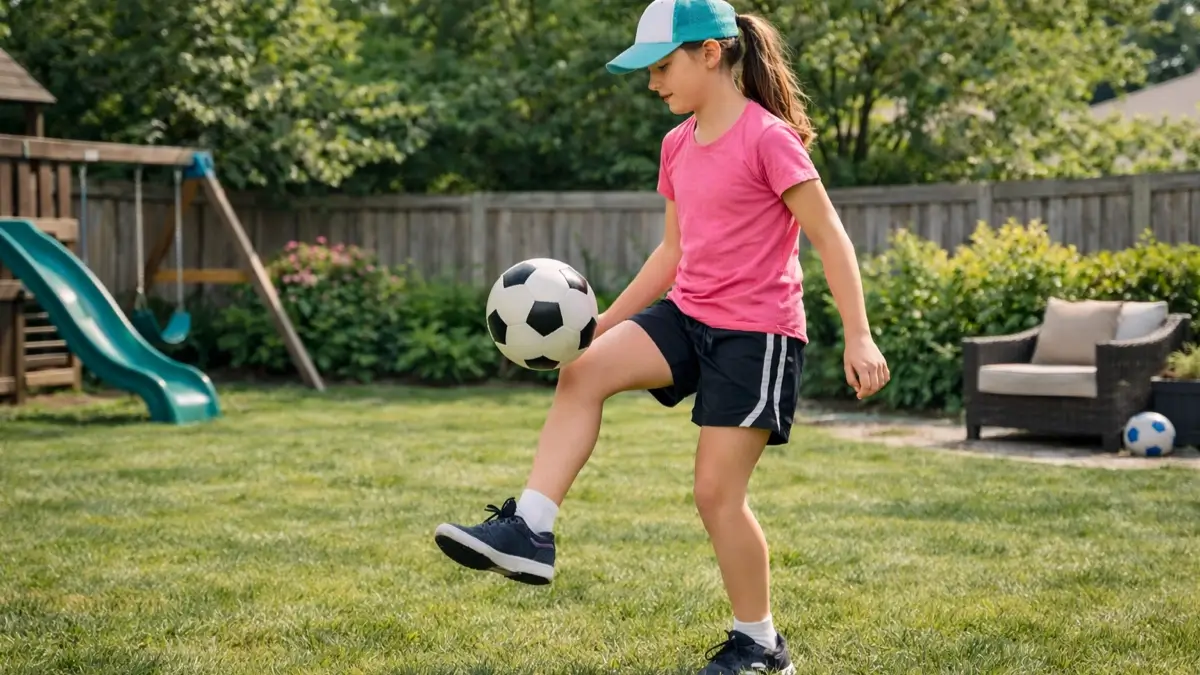
    Young players benefit from activities such as dribbling around cones , passing the ball against a wall, juggling the ball (keeping it in the air using repeated touches with the feet or thighs), and playing small games with friends or siblings.

    Watching soccer can also help. Many young players learn by observing how experienced players move, pass, and create space on the field.

    Even ten minutes of casual practice several times a week can make a noticeable difference over time.

    As you can see if you create opportunities for your child to play the sport, practice during downtime, and even watching advanced or professional players play the sport, the exposure pays off when they get onto the field. 

    Frequently Asked Questions

    Here are a series of most frequenlty asked questions by parents (and their answers0 about how kids and youth can improve at soccer.

    How often should kids play soccer to improve?

    Most youth players improve through regular team practices and games. Practising with the ball for ten to fifteen minutes a few times each week at home can help build skills more quickly.

    What is the most important skill for young soccer players?

    Ball control is the foundation of the game. Players who can dribble, stop, and pass the ball confidently tend to develop faster in other areas.

    Does juggling the ball help players improve?

    Yes. Juggling means keeping the ball in the air using repeated touches with the feet, thighs, or head without letting it hit the ground. It improves coordination, balance, and touch on the ball.

    Should kids focus only on soccer?

    Many coaches encourage younger players to try multiple sports. Different activities help develop coordination and athletic ability that benefits soccer later.

    At what age should soccer training become more serious?

    Training often becomes more structured around the U10 to U12 stage when players begin understanding tactics and teamwork.

    Is private coaching necessary?

    Private training can help older players refine specific skills, but it is not necessary for most children. Consistent team training and informal play provide strong development.

    Why do some players improve faster than others?

    Children develop at different rates physically and mentally. Confidence, practice habits, and playing experience all influence improvement.

    Is watching soccer helpful for young players?

    Yes. Watching games can help young players understand movement, teamwork, and decision-making. Expose them to professional league play and get out and watch local games as well.

    How can parents support improvement without creating pressure?

    Encouragement, patience, and opportunities to practise usually help more than criticism or intense expectations.

    What keeps kids motivated to improve in soccer?

    Enjoyment is the strongest motivator for kids that play soccer. Players who feel supported by coaches, teammates, and parents are more likely to continue practising and developing their skills.

  • Understanding the U-Age System in Canadian Youth Soccer


    Parents who are new to youth soccer often hear terms such as U6, U10, or U14 and wonder what they actually mean. At first glance they can sound like league tiers or competitive levels. In reality, the letters simply refer to age groups.

    The “U” stands for “Under.” A U10 team is made up of players who are under 10-years-old during that soccer season. A U14 team includes players who are under age 14.

    This system is used across Canada and in most countries that offer youth soccer programs because it helps ensure children play with peers who are in roughly the same stage of physical and social development.

    At the start of each season, I meet parents at their child’s first practice who hear these terms for the first time. Once the structure becomes clear to them, the rest of youth soccer suddenly makes much more sense.

    (For more on questions about how youth soccer works in Canada, see our complete guide.)

    Why Youth Soccer Uses the U-Age System

    Youth sports are organized around development. Children grow quickly in coordination, strength, and decision-making between the ages of four and eighteen. A five-year-old learning basic balance is very different from a 15-year-old learning team tactics.

    Grouping players by age keeps competition fair and allows coaches to focus on skills that match each stage of development.

    Without these divisions, younger players would struggle against older and stronger opponents. The U-age structure helps create a safer and more effective learning environment.

    Typical Youth Soccer Age Divisions in Canada

    While exact divisions can vary slightly by region or club, most youth soccer programs in Canada follow a similar progression.

    DivisionTypical Player AgeMain Development Focus
    U5-74–6 years oldBasic movement, coordination, and fun
    U8 & U97&8– years oldMovement, technical development, fun
    U10 & U119 & 10 years oldMovement, technical development, fun 
    U12 & U1311 & 12 years oldTechnical development, decision making, teamwork, decision-making
    U14 & U1513 & 14 years oldTactical awareness, game understanding, athletic development, mental preparation
    U1615 years oldTactical awareness, game understanding, athletic development, mental toughness 
    U1816–17 years oldPosition specialization, technical refinement, preparing to win

    Each stage builds on the previous one. Younger players focus on basic coordination and ball control, while older players gradually develop tactical awareness and game strategy. It is also hugely important, particularly in the early years, to have a strong focus on falling in love with the game. This helps retain young players in the sport. 

    Parents who want a deeper explanation of how players improve at each stage can read this post:  How Kids Get Better at Soccer (By Age Group).

    How Team Sizes Change by Age

    One of the first things parents notice is that young children do not play the 11 players versus 11 (known as “11v11”) version of soccer seen in teen and adult leagues.

    Instead, youth leagues use smaller teams and smaller fields so players get more touches on the ball and stay involved in the play.

    Typical formats in Canada include:

    DivisionTypical Game Format
    U8 & 95v5 
    U10 & 117v7 
    U12 & 139v9 
    U14+11v11

    Smaller teams allow young players to interact with the ball more often. That increased involvement helps develop confidence and technical skills much faster than full-sized games would. Small-sided games also encourage more 1v1 situations and increase the number of attacking moments in the game, which are both key factors in long term player development for soccer. 

    Parents who want to understand how long these games usually last can see this guide: How Long Does a Kids’ Soccer Game Last?

    How Birth Years Determine Eligibility

    Many parents assume teams are organized strictly by a child’s birthday during the current season. In practice, most leagues use birth-year groupings.

    Players born in the same calendar year are usually placed in the same age division. For example, children born in 2016 might play together in a U10 division depending on the league structure.

    Using birth years helps leagues keep teams consistent throughout the season and prevents players from changing divisions mid-year after a birthday.

    Most clubs publish an age chart before each season so parents can quickly see which division their child belongs in.

    Recreational vs Competitive Youth Soccer

    Another point that can confuse parents is the difference between recreational and competitive soccer programs.

    Most children begin in recreational or house league programs, where the focus is participation, enjoyment, and basic skill development. These programs are generally run by community soccer clubs (like Toronto High Park FC) as opposed to league or district associations. 

    As players get older, some clubs offer competitive teams that train regularly (usually twice per week), play in an organized league and additionally, may travel for tournaments. These programs often involve tryouts to secure a spot on a team and require a higher level of commitment. 

    Both pathways can provide valuable experiences. Many players remain in recreational leagues for years while continuing to develop strong skills and friendships through the sport.

    Parents who are new to youth soccer may also find it helpful to understand the basic equipment required for the game: What Equipment Is Needed for Kids’ Soccer?

    Canadian Youth Soccer Seasons

    In most parts of Canada, youth soccer follows two main seasons.

    The outdoor season usually runs from late spring through early fall. This is the primary soccer season for many clubs and leagues.

    Many organizations also offer indoor programs during the winter months, often played in gymnasiums or indoor soccer facilities. These leagues help players maintain skills and stay active during colder weather. 

    However, as the game has grown in popularity over the last 10 to 15 years, it is commonplace for players to choose soccer as their No. 1 sport and play all year round, including during summer and winter months. 

    What New Soccer Parents Need to Know About Age Divisions

    For parents entering youth soccer for the first time, the U-age system may feel confusing at first. After a month  or two it becomes easy to follow.

    A few points are worth remembering.

    Age divisions are designed primarily for development rather than competition. The goal is to provide a learning environment suited to each stage of growth.

    Players also develop at different speeds. A child who struggles during one season may improve dramatically the next as coordination and confidence increase. The development path is not linear. 

    Most importantly, enjoyment of the game remains the biggest factor in long-term improvement. Children who enjoy soccer and feel supported by coaches and parents are far more likely to continue playing and developing their skills.

    Frequently Asked Questions:

    Common questions parent ask about the U Age system in youth soccer:

    What does “U” mean in youth soccer?

    The “U” stands for “Under.” A U12 team includes players who are under 12-years-old during that soccer season.

    Why are youth soccer age groups organized this way?

    Age divisions allow children to compete with players in the same stage of development, which helps create fairer games and safer competition.

    Are age groups the same across Canada?

    Yes, all sanctioned soccer in Canada has to follow the grassroots standards as set by Canada Soccer and provincial associations such as Ontario Soccer

    How do I know which division my child belongs in?

    Clubs typically publish a birth-year chart each season showing which age group players are eligible for.

    Why do younger children play on smaller fields?

    Smaller fields and smaller teams help young players stay involved in the game and develop skills more quickly.

    Do all soccer countries use the U-age system?

    Yes. The “Under” age classification is used internationally across youth soccer and many other sports.

    What happens if my child is more advanced than their age group?

    Some clubs and leagues will allow players to play up a division. Coaches usually evaluate whether the player is ready physically and socially before making that decision.

    Why are some age groups combined?

    Leagues will sometimes combine age divisions. This is more common in older age brackets. For example, once the players have competed in the U18 division they may jump to the U21 division. 

    Does the age group determine the level of competition?

    No. Age groups determine eligibility, but competitive levels can vary within those divisions depending on the league or club structure. Most leagues will have different tiers of play within each age bracket. 

    Is the focus always competition in youth soccer?

    No. Especially in younger divisions, the main focus is development, enjoyment, and learning the fundamentals of the game. Scores, standings and trophies  are not a focus until the 11v11 game at U14. 


  • How to Choose the Best Soccer Cleats for Kids

    Every soccer season, I see the same moment happen during the first practice.

    A young player arrives wearing brand-new cleats. They look impressive. Bright colours, a recognizable brand logo, sometimes even the same style worn by a professional player they admire.

    Ten minutes later, that same player is sitting on the grass tugging at their shoes and telling a parent or coach that their feet hurt.

    It happens more often than parents expect.

    Choosing soccer cleats for kids is not really about finding the flashiest design or the most expensive model. For school-aged players, the best cleats are simply the ones that fit well, feel comfortable, and allow kids to move naturally on the field.

    After years of coaching youth soccer, I have watched hundreds of children step onto the field for the first time. The right cleats help them run freely and focus on learning the game. Poorly fitted shoes can distract them, slow them down, and sometimes make them dread practice.

    If your child is just starting the sport, exploring local youth soccer programs and camps can help them build skills and confidence alongside other beginners.

    Parents do not need to become soccer equipment experts. But understanding a few key factors will make choosing the right pair much easier.

    Why the Right Soccer Cleats Matter for Kids

    Soccer places unique demands on footwear because players accelerate, stop suddenly, pivot, and strike the ball repeatedly. Cleats must provide traction while still allowing natural movement and comfort.

    Properly fitted cleats do more than improve performance. They also help reduce the risk of blisters, foot pain, and minor injuries that can occur when shoes are too tight or too loose.

    When kids feel comfortable on the field, they focus on learning the game instead of thinking about their feet. That confidence can make a big difference in whether a young player develops a lasting love of soccer.

    What Cleats Kids Need at Different Ages

    Soccer cleats that work well for a six-year-old beginner are not always the best choice for a twelve-year-old who practices several times a week. As children grow, their speed, strength, and playing intensity change. Their footwear needs evolve as well.

    The table below provides a quick guide for parents.

    AgeTypical LevelWhat to Look for in CleatsParent Advice
    5-7Introductory or recreational soccerLightweight, flexible cleatsComfort and affordability matter most. Kids at this age grow quickly and rarely need advanced features.
    8-10Recreational or early competitive playSlightly sturdier cleats with reliable tractionFit becomes more important as kids run faster and kick harder. Avoid buying cleats that are too large thinking they will ‘grow into them’.
    11-13Competitive youth leaguesDurable materials and supportive fitPlayers practice more often, so cleats need to handle regular use while remaining comfortable.

    Many parents assume older players need expensive professional-level cleats, but that is rarely necessary. Unfortunately, top of the range boots these days can cost anywhere between $300 to $400, however, a well-fitting mid-range pair perform just as well for youth players. 

    It’s also worth noting that top of the range boots are designed for professional players who mostly play on grass surfaces. However, most of the time, grassroots players will find themselves training/playing on turf which will cause even the best boots to deteriorate quicker than if they were used on grass. 

    Indoor vs Outdoor Soccer Shoes

    Parents are often surprised to learn that indoor soccer shoes and outdoor cleats are designed for very different playing surfaces. In Canada, many children play soccer throughout the year. Outdoor leagues typically run in spring and summer, while indoor leagues become popular during fall and winter.

    Type of ShoeWhere It’s UsedSole DesignBest For
    Outdoor cleatsGrass or turf fieldsStudded sole for tractionOutdoor leagues, camps, and school teams
    Turf shoesArtificial turf fieldsShort rubber studs across the soleRecreational play on synthetic surfaces
    Indoor soccer shoesGym floors and indoor courtsFlat rubber soleIndoor leagues and school gym play

    Indoor soccer shoes may look similar to regular athletic shoes, but they are specifically designed for smooth gym floors.

    Indoor soccer shoes
    Indoor soccer shoes

    Outdoor cleats should never be worn indoors. The studs on the sole reduce traction on hard surfaces, which can increase the risk of slipping and injury. They can also damage gym flooring.

    For children who play soccer year-round, it is common to have both outdoor cleats and indoor soccer shoes to match the playing surface.

    Suitable cleats for outdoor grass surfaces
    Suitable cleats for outdoor grass surfaces

    How Soccer Cleats Should Fit

    Proper fit is one of the most important factors when choosing soccer cleats for kids.

    Cleats should feel snug but not tight. The heel should remain secure when the child walks or jogs, while the front of the shoe should leave a small amount of room for the toes.

    A helpful rule is to allow about a half a thumb’s width of space between the longest toe and the end of the shoe.

    Buying cleats that are too large is a common mistake. Parents sometimes choose a bigger size hoping the shoes will last longer as their child grows. Unfortunately, oversized cleats can reduce stability and can make running, ball control and kicking more difficult.

    Another useful tip is timing. Children’s feet tend to swell slightly throughout the day. Trying on cleats in the afternoon or evening often provides a more accurate sense of how they will feel during a game.

    Kids should also wear their soccer socks when trying on cleats, since those socks are usually thicker than everyday ones.

    How Much Should Parents Spend on Soccer Cleats?

    Youth soccer cleats vary widely in price.

    Entry-level models may cost around $40, while high-end cleats worn by professional players  will exceed $300. For most school-aged athletes, mid-range cleats provide the best balance between durability and cost.

    Children often outgrow their cleats before wearing them out. Because of this, spending heavily on professional-level footwear rarely provides much benefit. Comfort and proper fit will always matter more than advanced features designed for elite players.

    Brands Parents Often Trust

    Several brands consistently produce reliable youth soccer cleats.

    Nike, Adidas and Puma are the most widely recognized and offer a broad range of excellent cleats at different price points.

    You may also come across New Balance. The running shoe brand has become increasingly popular in youth soccer for its cleats because it offers wider sizing options that work well for players with broader feet.

    Umbro, a long-standing soccer brand, continues to produce simple and practical cleats at moderate prices.

    What Are the Best Soccer Cleats for Kids?

    Parents often search for the best soccer cleats for kids, but the answer is rarely a single brand or particular model. The best cleats are the ones that fit your child’s foot comfortably, match the playing surface, and hold up through a full season of practices and games.

    Some players prefer lightweight cleats designed for speed, while others feel more comfortable in slightly sturdier shoes that provide extra support. Foot shape also plays an important role. Certain brands run narrow, while others offer wider fits.

    For younger players especially, comfort should always take priority over advanced features or professional-level designs. 

    In most youth leagues, the best cleats are simply the ones that allow kids to run confidently, control the ball comfortably, and enjoy playing the game. 

    Where to Buy Soccer Cleats for Kids

    Parents have several good options when it comes to buying soccer cleats.

    Local sporting goods stores are often the best place to start. Stores such as Sport Chek, Canadian Tire, Decathlon, and independent soccer shops allow children to try on several models before choosing one.

    Soccer specialty stores (like Soccerworld in the Greater Toronto Area), can also be helpful because staff members often understand the needs of youth players and the playing surfaces used by local leagues.

    Online retailers provide convenience and a wider selection of styles and sizes. Parents who already know which brands fit their child well can often find good options through major online retailers and brand websites.

    Lightly Used Second-Hand Cleats

    These days budget can often be a factor, and for families buying several pairs for siblings, looking for lightly used second-hand cleats can be a great cost-savings strategy. A good pair of used cleats can usually be found for a fraction of the price of new ones. You can find them through community sports exchanges or local resale groups. You can also try a Play it Again Sports outlet. Or check with parents who have soccer-playing kids that are older than yours.

    A Coach’s Perspective

    Parents sometimes feel pressure to choose the perfect equipment for their child’s sport. In reality, soccer cleats are only a small part of the experience. What matters most is that kids feel comfortable and confident when they step onto the field. When their cleats fit properly, they stop thinking about their feet and start focusing on the game. That is when the real joy of youth soccer begins. Kids run freely, laugh with teammates, and celebrate their first goals. From a coach’s perspective, that is what youth sports should always be about.

    Related post: What Equipment is Needed for Kids’ Soccer

    Frequently Asked Questions About Soccer Cleats for Kids

    Parents often have practical questions when buying soccer cleats for their children. The answers below address some of the most common concerns coaches hear from families at the start of a season.

    How tight should soccer cleats be for kids?

    Soccer cleats should feel snug around the foot without causing pressure or discomfort. A good rule is to leave about a half a thumb’s width of space between the child’s longest toe and the front of the shoe. Unlike running shoes, cleats are meant to fit closely so the foot does not slide inside the shoe when a player accelerates or changes direction. If the shoe is too loose, it can lead to blisters and make ball control more difficult. Kids should also try on cleats while wearing soccer socks, since those socks are usually thicker than everyday ones.

    Can kids wear running shoes for soccer?

    Running shoes are not designed for soccer and generally should not be used during games or organized practices. Soccer cleats have studs on the bottom that grip grass or turf surfaces, helping players stop, turn, and change direction quickly. Running shoes have flat soles that can become slippery on grass fields, especially when the ground is wet. While running shoes may work for casual play on a playground or driveway, cleats are recommended once a child begins playing in organized leagues.

    How often do kids need new soccer cleats?

    Many children need a new pair of cleats at least once a year because their feet grow quickly. Younger players, especially those under age 10, may outgrow their cleats during the season. Parents sometimes notice the first signs when their child complains about tight toes or develops blisters. It is also worth checking cleats periodically for wear. If the studs on the bottom begin to flatten or the upper material starts to tear, the cleats may not provide proper traction or support.

    Are expensive soccer cleats better for kids?

    For most youth players, expensive cleats do not provide a significant advantage. High-end cleats are designed for competitive players who train frequently and demand specific performance features. Younger players usually benefit more from comfortable, durable mid-range cleats that fit properly. Many experienced coaches encourage parents to focus on fit and comfort rather than price or brand prestige.


    Do kids need different shoes for indoor soccer?

    Yes. Indoor soccer uses a different type of shoe designed specifically for smooth playing surfaces such as gym floors. Indoor soccer shoes have flat rubber soles that provide grip without damaging the floor. Outdoor cleats, which have studs on the bottom, should not be worn indoors because they can slip on hard surfaces and may damage gym flooring. Families with children who play year-round often keep both indoor shoes and outdoor cleats.

    Should parents buy soccer cleats one size bigger for growing feet?

    Buying cleats that are too large is one of the most common mistakes parents make. While it may seem practical to buy a larger size so the shoes last longer, oversized cleats can cause the foot to slide inside the shoe. This movement reduces stability and can make it harder for children to control the ball. A properly fitted cleat will always perform better than one that leaves extra room for growth.


    What type of cleats are best for beginner soccer players?

    Beginner players generally do best with lightweight, comfortable cleats that allow natural movement. There is no need for specialized or professional-level cleats at this stage. Entry-level or mid-range models from reputable brands usually provide all the support and traction young players need. As children gain experience and begin playing more competitively, they may develop preferences for certain styles or materials.

    How long do youth soccer cleats usually last?

    For most children, cleats last about one soccer season. Some players outgrow them before they wear out, especially during periods of rapid growth. Others may wear them down through regular practices and games. If the cleats remain in good condition after a season, younger siblings or teammates may be able to use them.

    Are turf shoes different from regular soccer cleats?

    Yes. Turf shoes are designed for artificial turf fields rather than natural grass. Instead of long studs, turf shoes have many small rubber nubs that provide traction on synthetic surfaces. They are often more comfortable for players who train regularly on turf fields. Some youth leagues allow either turf shoes or traditional cleats depending on the field surface.


    When should kids replace worn soccer cleats?

    Parents should consider replacing cleats if the studs on the bottom become worn down, the upper material begins to split, or the shoes no longer fit comfortably. Signs such as slipping on the field, frequent blisters, or visible damage to the shoe usually indicate it is time for a new pair. Replacing worn cleats helps ensure kids remain comfortable and safe during practices and games.

    Besides cleats, what other soccer equipment does my child need to play in a program or on a team?

    The short answer is: soccer ball, shin pads, and a water bottle. The team or program will provide guidance for a team jersey. Additional information and optional equipment can also be found in this post: What Equipment is Needed for Kids’ Soccer.