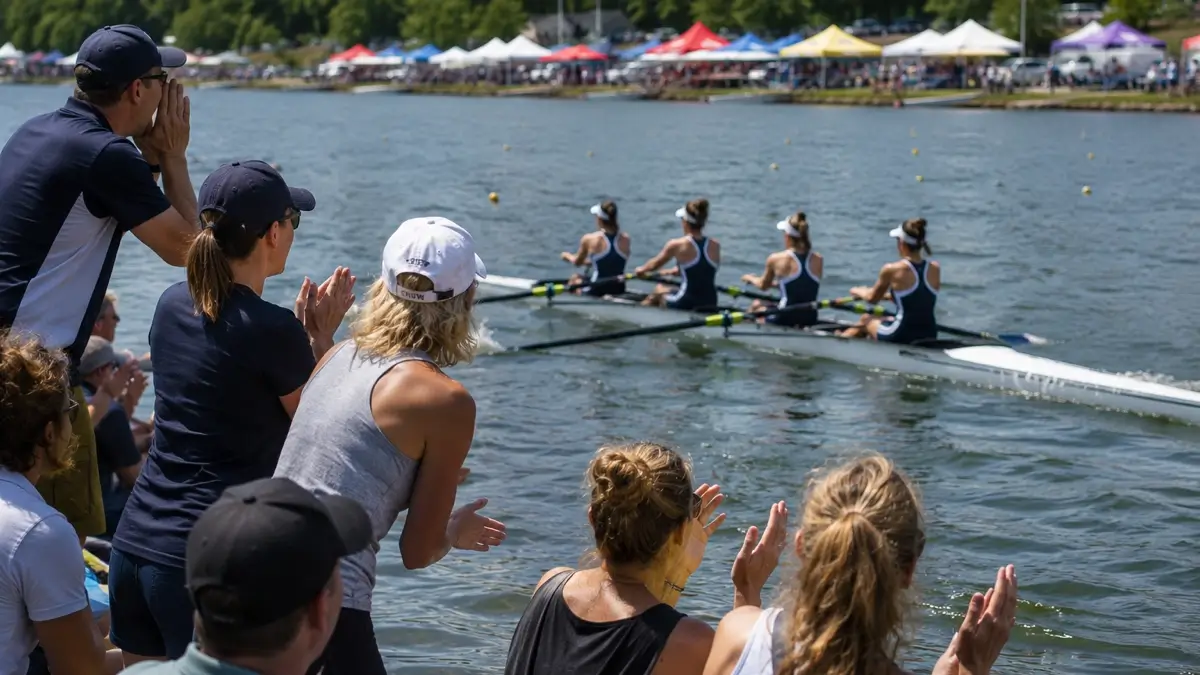
For families, there is usually a moment when rowing stops feeling like “just another extracurricular.”
It can happen during the first 5:30 a.m. practice. Or perhaps at the first regatta weekend that somehow costs more than a small vacation. And for many parents, it is when they realize their teenager has willingly chosen to spend hours pushing through freezing rain on a river or lake before the first bell rings at school.
Youth rowing has a reputation for producing disciplined, resilient athletes, but it is also a sport that requires a resilient family budget.
At the beginner level (most kids start rowing either in their tweens to early teens), rowing can actually look fairly reasonable compared to many organized sports in Canada. A local learn-to-row program may cost less than competitive gymnastics or travel hockey. But once athletes move into serious club rowing, costs rise steadily. Coaching fees increase, travel schedules expand, winter training becomes year-round, and families suddenly discover that rowing is not simply a summer sport at all.
By the later teen years, competitive rowing can cost Canadian families anywhere from CAD$5,000 to well over CAD$15,000 annually depending on the athlete’s level and travel schedule.
That may sound shocking initially. Yet many rowing parents will tell you the sport still feels comparatively manageable next to elite hockey, equestrian competition, or high-performance dance. The actual reality sits somewhere in the middle.
Find and compare rowing programs and clubs on the GoPlay platform. Free to browse, no account needed. Visit: https://app.goplay.ai or click the button below
Why Rowing Can Be Expensive
One reason rowing catches parents off guard financially is that much of the expense is invisible at first.
Unlike hockey, where you can physically see the cost piling up in skates, helmets, pads, and sticks, rowing’s costs accumulate from club infrastructure and training systems. Families are not usually buying boats themselves, at least not initially. Instead, they are paying for access to a very specialized environment.
Rowing clubs maintain expensive waterfront property, docks, trailers, coaching launches, storage facilities, safety equipment, and fleets of shells that can cost tens of thousands of dollars each. Then there is maintenance. Boats need repairs. Oars break. Equipment wears down. Insurance costs are significant. Transportation logistics for regattas are complex.
None of this is obvious when a child first signs up for a beginner session on a calm lake in July.
Beginner Rowing Is Often More Affordable Than Parents Expect
The good news is that introductory rowing programs are usually designed to remain accessible.
Most Canadian clubs want beginners to try the sport without requiring a wallet-shaking financial commitment immediately. Younger athletes generally use shared equipment, travel minimally, and train only a few times per week.
For a child around ages 10 to 13, annual costs often fall between CAD$1,200 and CAD$2,500 depending on the club and region.
That total usually includes: Club membership and beginner coaching. There’s also shared boat access, team apparel and basic athletic clothing, as well as local regattas.
You can find rowing programs for beginners on the GoPlay platform.
Compared to other youth sports, that can actually seem fairly reasonable. Many Ontario parents spend similar amounts on: hockey and baseball. Martial arts, dance and competitive swimming are in the same price bracket.
In the early years, rowing may still feel like “a good activity” rather than a lifestyle, but that changes once teenagers become competitive.
Competitive Rowing: Year-Round Commitment
By the mid-teen years, rowing can evolve into something much more demanding than many families initially imagined.
Practices usually move to early mornings before school. Weekend regattas become commonplace on the family calendar. Winter conditioning fills evening time and strength training enters the schedule. Coaches begin discussing erg scores, recruitment pathways, and long-term development.
Parents suddenly realize the sport does not really stop. In many ways it becomes a lifestyle if you have a teen in competitive tiers of the sport.
Competitive rowing in Canada is effectively year-round despite weather limitations. Indoor training becomes essential during cold months, particularly for athletes pursuing university recruitment or high-level competition.
This is also where costs begin climbing sharply. Club and coaching fees alone can range from roughly CAD$2,500 to CAD$6,000 annually for serious programs. Then travel changes everything financially.
Regatta Travel Is Where Many Families Feel the Real Financial Pressure
If you ask experienced rowing parents where the money really goes, many point to regattas. A weekend competition sounds like a fun distraction, a road trip to a nearby city. Yet, if you factor in hotels, meals and gas, then have the added costs for trailer transportation, occasional flights and competitive apparel, the costs tally starts to climb.
Regatta destinations include Ottawa, Kingston and Montreal. Or if you are coming out of Toronto, westbound trips to St. Catharines and London are common. Elite crews sometimes compete in the United States as well, particularly in Boston or Philadelphia.
A single regatta weekend can amount to hundreds or even thousands of dollars depending on distance and accommodations.
What surprises some parents most is how frequent these events become once athletes enter competitive streams. Travel is no longer occasional. It becomes built into the rhythm of family life. Some families begin scheduling vacations around regatta calendars because there is little room left elsewhere.
Winter Training Adds Another Layer of Expense
Canadian winters force rowers indoors, but training intensity continues.
This is when ergometers, strength programs, gym memberships, physiotherapy, and conditioning programs become central parts of development. Many serious teen athletes eventually convince their families to buy a home rowing machine.
The industry standard, the Concept2 RowErg, generally costs between CAD$1,500 and CAD$2,200 in Canada. Parents often hesitate initially because the machine looks enormous and expensive. Then they realize their teenager is training on it six days a week and suddenly it starts feeling less optional.
Some families never purchase one and continue using club equipment, while others quickly conclude that driving constantly to indoor training sessions is even less practical.
The hidden reality of rowing is that it gradually expands into the household itself.
Rowing Compared to Other Pricey Youth Sports
Parents trying to evaluate rowing financially often ask the same question: How does rowing compare to other competitive sports? The short answer is: More expensive.
If you are a parent with a child in elite hockey, figure skating, or equestrian competition, then it may actually feel moderate.
AAA hockey families in Canada regularly spend well beyond CAD$15,000 annually once tournaments, hotels, equipment replacement, private coaching, and travel are included. Competitive gymnastics and dance can also become financially intense because of choreography fees, costumes, travel, and extensive training hours.
Rowing distributes costs differently. Families are usually not replacing major personal equipment every season. Instead, the money flows into coaching, infrastructure and travel, as well as strength training and club operations.
Some parents actually prefer that structure because expenses feel more predictable. They are not suddenly buying another CAD$400 hockey stick halfway through the season because one snapped during practice.
Still, competitive rowing does belong in the “high-cost youth sport” category once athletes become serious.
Costs Parents Do Not Always Think About Initially
There are also secondary expenses that rarely appear on registration forms. We are talking about the fridge and pantry here. Teen rowers eat constantly. Grocery bills can grow dramatically during heavy training periods.
From a health perspective, physiotherapy or massage therapy is needed to help athletes manage recovery. And then there is the time. Parents sometimes take unpaid time off work for regattas or long travel weekends.
Then there is simply the mental load. A teenager training before sunrise affects the whole household schedule. Sleep routines change. Transportation logistics become more complicated. Siblings spend weekends at regatta sites. Entire family calendars begin revolving around training cycles.
For some households, this becomes exhausting. For others, it becomes part of the family’s identity.
Why So Many Families See Rowing as Worth it
Despite all of this, rowing continues to attract highly committed families across Canada because the sport develops qualities many parents value deeply.
Rowing rewards consistency more than flashiness. Athletes learn discipline, endurance, resilience, and teamwork in very measurable ways. The culture around rowing also tends to feel different from some hyper-commercialized youth sports environments.
Many parents describe rowing communities as grounded, hardworking, and academically focused. There is also a university pathway.
American colleges recruit Canadian rowers aggressively, particularly female athletes. Because rowing performance is highly measurable through erg scores and race times, athletes often feel advancement is based more on objective performance than politics or reputation.
There is also an emotional side. Parents often describe dramatic personal growth in their teenagers after several years in rowing. Kids become more independent. More disciplined. More resilient. The sport demands consistency in a way that shapes identity over time.
It is why many families who initially hesitate at the costs eventually stay for years. Not because rowing is cheap, but because they feel their child becomes stronger because of it.
Here is some additional cost information that will help you better understand the costs connected to rowing in a family with kids and youths in the sport.
Seasonal Youth Rowing Costs in Canada
| Season | Typical Expenses | Estimated Cost (CAD$) |
| Spring | Club fees, water practices, apparel | $800–$2,500 |
| Summer | Camps, regattas, travel | $1,000–$4,000 |
| Fall | Competitive season and coaching | $700–$2,000 |
| Winter | Erg training, gyms, conditioning | $500–$2,500 |
Estimated Annual Costs by Level
| Participation Level | Typical Age | Estimated Annual Cost (CAD$) |
| Learn-to-Row | 10–13 | $1,200–$2,500 |
| Club Development | 13–15 | $2,500–$5,000 |
| Competitive High School | 15–18 | $5,000–$9,000 |
| Elite / National Stream | 16–18 | $8,000–$15,000+ |
FAQ: Youth Rowing Costs
Here are common questions and answers about youth rowing costs in Canada.
For most Canadian families, beginner rowing programs fall somewhere between CAD$1,200 and CAD$2,500 annually. That figure typically includes club membership fees, basic coaching, access to club boats, and a limited number of local regattas or events. Families may also need to buy athletic clothing, water-resistant layers, and team apparel, but equipment costs are usually far lower at this stage than parents initially fear. The good news is that most rowing clubs intentionally keep introductory programs relatively accessible because they are trying to grow participation. Beginner athletes are generally using shared boats and training in larger groups, which helps spread costs across many families. The transition into more competitive rowing is where expenses begin accelerating.
From the outside, rowing clubs can seem expensive compared to community sports programs. But much of that comes down to infrastructure. A rowing club maintains expensive waterfront property, docks, boat houses, trailers, coaching launches, safety equipment, and fleets of shells that may cost tens of thousands of dollars each. Even transporting boats to regattas requires specialized trailers and logistics. Then there is coaching. Competitive rowing programs often involve multiple weekly sessions, early mornings, weekend practices, and strength training support. By the teen years, some athletes are training at volumes comparable to elite swimmers or runners.Parents are not simply paying for “boat access.” They are supporting a full athletic development system. You can find rowing clubs on the GoPlay.ai platform. Free to browse, no account needed.
Usually not, and that is one reason rowing remains more accessible than some people assume. Most clubs provide shells and oars for beginner and intermediate athletes. In fact, many rowers spend years competing successfully without ever owning a personal boat. Team boats such as eights and fours are entirely club-based in most youth programs. Where costs can change is at the elite single-sculling level. Athletes competing nationally or pursuing highly individualized training sometimes purchase personal shells. Those boats can easily cost CAD$8,000 to CAD$18,000 or more. Thankfully, most families never reach the point where personal boat ownership is expected.
For many families, it is not the club fees that hurt most. It is the travel. Once teenagers begin competing seriously, regattas can take over weekends for much of the season. Families may suddenly find themselves driving across Ontario, staying in hotels, paying for meals on the road, and taking time off work.
A single competitive weekend can quietly turn into a CAD$1,000 expense before anyone realizes it. Winter training also becomes a major contributor. Serious athletes often join strength and conditioning programs, attend indoor training camps, and eventually purchase rowing machines for home use. By that point, rowing has shifted from “an activity” into something much closer to a high-performance athletic lifestyle.
Usually yes, although the gap narrows at elite levels. Hockey families face relentless equipment replacement. Kids outgrow skates constantly, sticks break, and tournament travel can become overwhelming. Many AAA hockey families spend well over CAD$15,000 annually. Rowing tends to distribute costs differently. Parents are spending less on personal equipment and more on coaching, travel, and training infrastructure. For some families, rowing actually feels financially calmer because the expenses are more predictable. You are not suddenly buying another pair of CAD$1,200 skates halfway through the season because a teenager had a growth spurt. That said, elite rowing is absolutely not cheap. A nationally competitive rower traveling extensively may still cost a family well into five figures annually.
At first, probably not. Many clubs provide ergometer access during scheduled training sessions, and beginner athletes can progress perfectly well using club equipment. But once training intensifies, home ergs become increasingly common because of convenience and scheduling. Canadian winters are long, and indoor training becomes essential. A teenager training six days a week may need additional erg sessions outside formal practices. At that point, many parents decide that buying a rowing machine is easier than constantly commuting to the club. The Concept2 RowErg is considered the gold standard and typically costs between CAD$1,500 and CAD$2,200 in Canada. For serious athletes, it becomes one of the few major personal equipment purchases in the sport.
Compared to many sports, yes. Rowing has a surprisingly strong university recruitment pipeline, especially in the United States. NCAA rowing programs actively recruit athletes from Canada, particularly female rowers, because collegiate rowing opportunities are extensive. That does not mean scholarships are automatic. Athletes still need strong academics, strong erg scores, race performance, and consistent development. Still, rowing is often viewed as one of the more realistic pathways for university athletic recruitment because the sport is measurable. Coaches can evaluate objective data like split times and endurance metrics rather than relying entirely on subjective scouting. For academically strong athletes, rowing can open doors.
For competitive athletes, absolutely. The outdoor season may slow down during colder months, but training rarely stops. Winter often becomes one of the most important development periods because athletes focus heavily on conditioning, endurance, strength training, and erg performance. Some teenagers train before school, attend afternoon practices, and compete in indoor rowing events throughout winter. Parents are often surprised by how much structure exists outside the traditional rowing season. Once athletes enter serious club programs, rowing tends to shape the family calendar year-round.
That depends entirely on the athlete. For some kids, rowing becomes transformative. Parents often talk about shy teenagers becoming more confident, unfocused kids developing discipline, or anxious students finding stability through structured training and strong team culture. The sport also has a reputation for attracting highly motivated peer groups. Many rowing families describe the environment as supportive, disciplined, and less socially toxic than certain other competitive sports. Of course, the commitment is substantial. Early mornings, travel weekends, and escalating costs are real. Families should go into the sport understanding that competitive rowing can become a major part of household life. But for the right teenager, many parents would tell you the experience ends up being worth far more than the invoices.