
Red, Orange, Green: Understanding Kids’ Tennis Stages

  • , ,
    Red, Orange, Green: Understanding Kids’ Tennis Stages

    by Jeff Rockwell, Tennis Instructor at Osler Bluff Ski Club

    A father stands at the fence on a Saturday morning and watches his six-year-old rally. The ball is red and soft and a little oversized. The court is short, the net is low, and his daughter is sending four, five, six balls in a row back over it, laughing somewhere in the middle of the streak.

    Then he leans toward me and asks the question I hear almost every week. When does she get to use a real ball.

    It is a fair question. It also carries a quiet worry underneath it. The worry is that the red ball is a beginner’s toy, that the short court is a waiting room, and that the faster his daughter is moved along, the better she must be doing.

    Here is the part worth saying at the start. The colours in kids’ tennis are not a ranking of talent. They are equipment, sized and slowed to fit a child’s body and a child’s eyes. A six-year-old rallying happily with a red ball is not behind anyone. And rushing to the next colour, in my experience, is one of the more reliable ways to make a young player worse.


    Find and compare tennis programs and clubs on the GoPlay platform. Registration is free. Visit: app.goplay.ai or click the button below


    What Progressive Tennis actually is

    For most of the sport’s history, kids learned tennis by being handed a shrunken version of the adult game. A full court that stretched out like a parking lot. A yellow ball that came off the racquet fast and bounced up around their ears. A racquet built for a grown adult’s arm. The child adapted or the child quit, and a lot of them quit.

    Progressive tennis flips that around. Rather than shrinking a child down to fit the adult game, it scales the game to fit the child. Smaller courts, lighter and slower balls, racquets sized to the player, all staged so a five-year-old can actually rally and play points from the first session. Tennis Canada describes it plainly as a collection of adaptations that make tennis more accessible, enjoyable and easier to play.

    This is not a Canadian invention, though Canada has leaned into it hard. It grew out of the International Tennis Federation’s Play and Stay work, which now shapes how young kids start the game around the world. In Canada it shows up most visibly in Tennis Canada’s Rogers First Set program, built on the same red, orange and green stages you will see on club schedules across the country.

    So when your child is put on a red ball, they are not being kept out of tennis. They are being handed the version of it that lets them play tennis today.

    Red, Orange, Green, and the Green Dot

    The colours describe the ball, and the ball sets almost everything else. Here is what each one actually means, in plain terms.

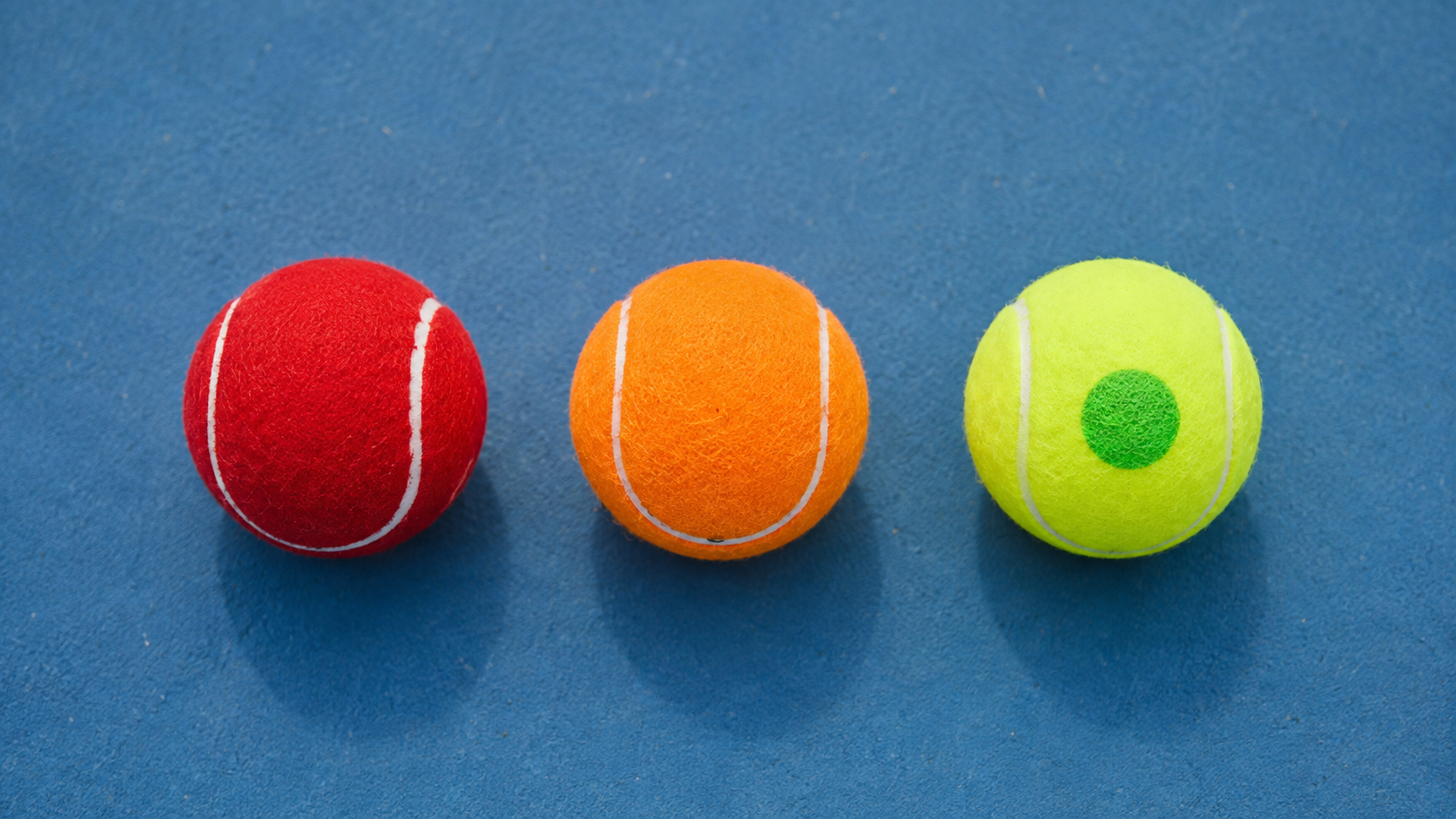
    The red ball is the slowest and softest. It is foam or low-pressure felt, a little larger than a standard ball, and it travels roughly seventy-five percent slower than a yellow one. It lives on a short court, about the width of a doubles court laid sideways, with a low net. This is where the youngest kids start, often around ages five to eight.

    The orange ball is the next step up. It moves about fifty percent slower than a yellow ball and plays on a three-quarter court. A child on orange is usually starting to cover more ground and rally with a bit more shape.

    The green ball is where things get close to the full game. It is the same size and weight as a standard yellow ball but with about twenty-five percent less pressure, so it flies and bounces a touch slower. You will often hear it called a “green dot” ball, because it is marked with a small green dot to tell it apart from a full-pressure yellow ball that looks identical. Green plays on a full-size court with a regular net. It is the last stop before a child is hitting with a standard yellow ball on the same court the pros use.

    Notice what is changing as the colours move. The ball speeds up, the court grows, and the racquet lengthens. Every one of those changes asks more of the player. That is the whole design. Each colour hands a child a challenge they can actually meet, then hands them a slightly bigger one when they are ready for it.

    Why a slower ball teaches faster

    This is the part that feels backwards to a lot of parents, so it is worth sitting with.

    A faster ball does not teach a child faster. It usually teaches them worse.

    Watch what happens when you put a small beginner on a full court with a real yellow ball. The ball arrives before they are set. It bounces up past their shoulder. They reach, they lunge, they slap at it late, and they miss most of them. What they are learning in that moment is not tennis. It is panic, and a rushed, arm-only swing that a coach then has to spend years undoing.

    Now slow the ball down and shrink the court. Suddenly the child has time. The ball meets them at a comfortable height, out in front of their body where a good contact point lives. Research on scaled tennis equipment has found exactly this. When young beginners use lower-compression balls and appropriately sized racquets, they make contact in front and to the side of the body and swing from low to high far more often, which is the foundation of every real groundstroke. They also simply hit more balls back, and rallying is how the game is learned.

    Parents often assume the harder ball is the more advanced training, the way heavier weights mean a harder workout. In reality, the slower ball is not making tennis easier. It is making tennis learnable. The speed comes later, once the movement underneath it is sound.

    The colours are about equipment, not a report card

    If there is one idea to carry out of this article, it is this. The colour of your child’s ball tells you what equipment gives them the best chance to learn right now. It does not tell you how talented they are, and it is not a grade.

    Two kids the same age can sit at different colours for reasons that have nothing to do with ability. One has been playing since she was four. One picked up a racquet last month. One is tall and coordinated for his age. One is still growing into his feet. None of that is a verdict on how good they will be at twelve, or sixteen, or thirty-five.

    This matters because the pressure to move up is real, and it almost never comes from the child. It comes from the fence. A parent sees another kid on orange and reads it as a scoreboard. The trouble is what moving up too soon actually does. It takes a child who was rallying with confidence and margin and drops them into a ball moving faster than they can read, on a court bigger than they can cover. The rallies collapse. The swing shortens back into a panic-slap. The fun leaks out.

    A child who is a little bored on red is fine. A child who is drowning on orange is a problem that can take a season to fix.

    Age tells you where to start, not when to move

    The stage charts all list age ranges, and those ranges are useful. A five-year-old belongs on red. A ten-year-old who has never played does not belong on a full-pressure yellow ball just because of the number on their birthday cake. Every youth sport runs into this. It is the same tension behind the U-age brackets in Canadian soccer, where the birth year sets the group and everything else sets the player.

    But age is where you start the conversation, not where you end it. Two things matter more than the calendar. The first is the body, meaning size, strength and coordination. The second is time in the sport, meaning how many hours a child has actually spent rallying. A tall, athletic eight-year-old who has played for two years and a small seven-year-old in her first month might both be exactly where they should be, on two different colours.

    Children do not graduate to the next ball because they had a birthday. They progress because they are ready. Those are different things, and the difference is the entire point.

    How a coach knows a child is ready

    So how do we actually decide. Not by age, and not by how badly a parent wants it. We watch four things.

    We watch whether the rally holds. A child who is ready to move up can keep a ball going with a partner without the point falling apart every second shot. We watch the contact point, whether they are meeting the ball out in front or still catching it late and cramped. We watch court coverage, whether they can recover after a shot and get to the next ball, because the next colour will hand them more ground to cover. And we watch decisions, whether they are starting to aim the ball somewhere on purpose rather than just getting it back.

    Put simply, a child is ready to move up when the current stage has become comfortable and a little too easy. They are winning points with room to spare. The challenge has drained out of it. That is the moment the next ball helps, because it restores the challenge without tipping into chaos.

    You can usually see the right stage from the fence, too. Your child is in the right place when the rallies are happening, when they are being stretched but not overwhelmed, and when they still want to come back next week. That last one is the most important reading on the dial.

    Choosing a tennis program that keeps a kid playing

    Not every program runs progressive tennis well, so it is worth knowing what good looks like before you enrol.

    Look for coaches who use the staged equipment on purpose and can explain why, not ones who put every kid on a yellow ball because that is what a real racquet club looks like. Look for small groups and a lot of actual ball-striking, kids rallying and playing points early, rather than long lines waiting for a turn. Look for an environment built around fun and long-term participation instead of early results, because the healthiest young player is simply the one who is still playing in ten years. A program running Rogers First Set, or built on the same red-orange-green model, is usually a good sign.

    And ask one direct question. How do you decide when a child moves up. A good coach will have a real answer about rallies and readiness. If the answer is only about age, keep looking. It belongs on the short list of questions worth asking before you register anywhere.

    I made the broader case for the sport elsewhere, in is tennis the healthiest sport for kids? The short version is that tennis is one of the few games a person can play at six and at sixty. The colours exist to get your child onto that path and keep them there.

    The colours were never the point

    It is easy, standing at the fence, to turn a child’s tennis into a ladder and start counting the rungs. Red, then orange, then green, then the real thing, faster please.

    But the ladder was never the point. The point is a child who reaches for a ball she has no business getting to, gets a racquet on it, sends it back, and laughs. The colour under that moment will change on its own, quietly, at the right time, and you will barely notice the day it happens. What you will notice is a kid who wants to play again tomorrow. Get that right and the rest takes care of itself.


    Find and compare tennis programs and clubs on the GoPlay platform. Registration is free. Visit: app.goplay.ai or click the button below


    Frequently Asked Questions

    What do the red, orange, and green tennis balls mean?

    They are the stages of progressive tennis, and each colour is a ball scaled to a child’s stage of development. Red is the slowest and softest and plays on a short court, orange is a step faster on a larger court, and green is close to a full yellow ball on a full court. The colours change the speed of the ball and the size of the court so a child is always playing a version of tennis they can actually rally in. They describe the equipment a child is using, not how good they are.

    What age should my child start with a red ball?

    Most children start on red somewhere around ages five to eight, and some age-appropriate programs begin even younger. The red ball is soft, slow and a little oversized, which lets a young child track it and hit it without feeling rushed. Age is only a starting guide, though. What matters more is that the child can rally and enjoy it, which the red ball is designed to make possible from the first session.

    When should my child move up to the next ball colour?

    When the current stage has become comfortable and a little too easy. A child is ready when they can keep a rally going, meet the ball out in front, cover the court, and start placing shots on purpose, all with room to spare. Moving up before that trades a confident player for an overwhelmed one. There is no prize for reaching yellow early, so let readiness lead.

    Is the red ball too easy for my child?

    If your child is rallying well and clearly winning points with margin, the red ball may have done its job, and that is worth mentioning to their coach. But “too easy” is exactly the right condition to be in just before moving up, not a sign the stage was a waste. A child who looks like they are cruising on red is building the movement and contact that the faster balls will demand later. Boredom is a signal to progress, not proof the colour was beneath them.

    Can my child skip a stage?

    Occasionally, but it is rare and it should be a coach’s call, not a shortcut. The stages exist because each one builds something the next one needs, so skipping usually just moves a gap further down the road. A child who arrives with real experience from another racquet sport might slot in higher than their age suggests. For most kids, moving through the stages in order is what makes the progress stick.

    What is a green dot ball, and how is it different from a regular tennis ball?

    A green dot ball is the same size and weight as a standard yellow ball but has about twenty-five percent less internal pressure, so it flies and bounces a little slower. It is marked with a small green dot precisely because it looks identical to a full-pressure yellow ball otherwise. That small drop in speed is enough to help a child transitioning to the full court keep control while they adjust. It is the last step before a standard yellow ball.

    Does my child need a different racquet for each stage?

    Racquet length does increase as children move through the stages, roughly from nineteen to twenty-three inches at red up toward twenty-six inches at green. A racquet sized to the child helps them swing properly rather than muscling an adult frame around. You do not need anything expensive, and many programs supply appropriately sized racquets for beginners. It is worth checking the length matches your child’s stage before buying, and worth knowing what a season in youth sport tends to cost before you commit to more than one.

    My child is tall for their age. Should they be on a faster ball?

    Not automatically. Height helps with reach, but it does not by itself give a child the timing, coordination and rally consistency that the faster balls demand. A tall beginner still needs to learn to meet the ball out in front and control a rally, and the slower ball is where that gets built. Let the coach base the decision on how your child is actually playing, not on how they measure up.

    What is Rogers First Set?

    Rogers First Set is Tennis Canada’s national program for introducing kids to the game, delivered with partners and community coaches across the country. It is built on the red, orange and green progressive tennis stages, with the goal of letting young players rally and enjoy tennis from the start rather than waiting until they can handle a full court. If a local program runs it, that is usually a good sign the equipment and coaching are matched to young players. You can compare local tennis programs and clubs on GoPlay to find options near you.

    How do I know if my child is in the right stage?

    Watch the rallies and watch their face. A child in the right stage is being challenged but not overwhelmed, hitting plenty of balls back, and still wanting to come back next week. If every point collapses in a scramble, the stage may be too fast for now. If they look bored and are winning easily, they may be ready to move up, which is a conversation to have with their coach.

  • How Kids Get Better at Soccer in Canada By Age Group

    Parents often ask this simple question during the soccer season: How can my child get better at soccer?

    Sometimes the query comes after a difficult game or when their child suddenly wants to practice every day in the backyard. Some parents simply want to support their child’s interest in the sport without pushing too hard.

    The honest answer is that getting better at soccer rarely comes from a single drill, a weekend camp, or a new pair of cleats. Improvement always happens gradually. It comes from repeated touches on the ball, confidence built over time, and experience playing in real games.

    A six-year-old learning to dribble should not train the same way as a fourteen-year-old learning tactics and positioning. Youth soccer in Canada is structured around ages and stages of development. When players focus on the right skills at the right age, improvement tends to follow naturally.

    Parents who understand those stages often find it much easier to support their child’s progress.

    If you’re just getting started or trying to make sense of how everything fits together, it helps to understand how youth soccer is structured across Canada. From age group systems and skill development to competitive pathways and what to expect as a parent, there’s a bigger picture behind each local program. You can explore our complete guide to youth soccer in Canada for a clear breakdown of how it all works, along with answers to common questions parents have as their children move through the sport.

    Understanding the U-Age System in Youth Soccer

    Youth soccer in Canada is organized by age groups such as U8, U10, or U14. The “U” simply means “Under.” So for example, the U10 team is made up of players who are under the age of 10 during that season. U10 = Under 10 years old.

    Leagues use these divisions so children compete with players who are in roughly the same stage of development as they are and within a year or so of their age.

    You can see a breakdown in the next section, however if you want to dive deeper, you can read a full explanation in this related article on our site:  Understanding the U-Age System in Canadian Youth Soccer.

    Soccer Skills Improvement By Age Group

    As with any sport, youth soccer players improve as they grow. The table below shows the typical focus at each stage of development in soccer. Most youth soccer programs in Canada follow a similar progression.

    DivisionTypical Player AgeMain Development Focus
    U5-74–6 years oldBasic movement, coordination, and fun
    U8 & U97&8– years oldMovement, technical development, fun
    U10 & U119 & 10 years oldMovement, technical development, fun 
    U12 & U1311 & 12 years oldTechnical development, decision making, teamwork
    U14 & U1513 & 14 years oldTactical awareness, game understanding, athletic development, mental preparation
    U1615 years oldTactical awareness, game understanding, athletic development, mental toughness 
    U1816–17 years oldPosition specialization, technical refinement, preparing to win

    Each stage builds on the one before it. Younger players focus on coordination and comfort with the ball, while older players begin to understand strategy, teamwork, and game management. These stages are outlined further in Canada Soccer’s Long Term Player Development Pathway (loads a PDF file). 

    Understanding Your Child’s Soccer Development Journey

    As kids grow in soccer, what they need and how they learn changes. The Long-Term Player Development (LTPD) model is a framework used in youth soccer to match training, competition, and expectations to a child’s stage of development.

    Instead of pushing kids too hard too early, LTPD focuses on building the right skills at the right time. It starts with fun and movement, then gradually adds technical skills, teamwork, and competitive play.

    The goal is simple: help kids enjoy the game, stay in it longer, and reach their full potential, whether that’s recreational play or elite competition.

    Active Start (U4 to U6)

    This is where the journey begins. At this stage, young players are introduced to basic movement skills such as running, jumping, landing, kicking, throwing, and catching. Sessions are centred around fun, informal play and positive encouragement. The goal is simple, to help children build confidence, stay active, and enjoy being part of the game.

    Fundamentals (U6 to U8 for girls, U6 to U10 for boys)

    As players grow, the focus shifts toward developing the building blocks of movement. This includes agility, balance, coordination, and speed. Players are also introduced to the basics of soccer in an environment that emphasizes fun, cooperation, and plenty of time on the ball. At this stage, enjoyment and engagement remain the priority.

    Learning to Train (U8 to U11 for girls, U9 to U12 for boys)

    Often referred to as a key development window, this stage is where players begin to truly learn how to play. Children become more capable of understanding feedback, reflecting on their actions, and learning from mistakes. Training focuses on developing a wider range of soccer skills and introducing simple principles of play in a fun and challenging environment.

    Across all three of these early stages, there are no league standings and no emphasis on results. The priority is to help children develop skills, confidence, and a genuine love for the game.

    Training to Train (U11 to U15 for girls, U12 to U15 for boys)

    As players move into adolescence, their experience becomes more structured. This stage often coincides with rapid physical growth, making it an ideal time to develop endurance. Players are introduced to concepts such as goal setting, mental preparation, and managing both success and setbacks. Technical development continues, including more advanced and position specific skills.

    Training to Compete (U15 to U19 for girls, U16 to U20 for boys)

    At this stage, players begin to apply their skills in more competitive environments. The game is now played in its full format, and players focus on refining their techniques while developing tactical awareness, discipline, and mental toughness. Training prepares players to perform consistently under pressure.

    Training to Win (U18 plus for girls, U19 plus for boys)

    For players who progress to higher levels, the focus shifts to performance. Most core skills are now well established, and the emphasis is on maximizing potential. Players work on adapting to different game situations, establishing strong pre training and pre match routines, and maintaining peak physical and mental condition.

    A pathway for every player

    It is important to recognize that every player’s journey is different. While some may pursue high performance opportunities, others may choose to continue playing recreationally. Both pathways are equally important.

    The Long Term Player Development model is designed to support all players by focusing on age appropriate development and positive experiences. When children are given the right environment at the right time, they are more likely to enjoy the game, improve their skills, and stay involved for life.

    What New Soccer Parents Need to Know About Player Development

    I wanted to make mention at this point about expectations around improvement in youth soccer.  It never happens overnight and is usually a progression that you can see over a season (five to six months), but not necessarily game to game, although it is exciting to see when it does.

    Parents sometimes expect progress to show up in obvious ways, such as scoring more goals or running faster than other players. In reality, development usually appears through smaller changes.

    A player who once rushed to kick the ball away might begin to control it. A player who used to chase the ball everywhere may start to think about their defensive positioning,  or an attacker might position themselves correctly at the right moment. From a coaching perspective, those small changes often signal real progress.

    The players who train regularly (e.g. twice a week as a minimum) and play regular games improve most consistently and are usually the ones who stay associated with the game for longer. 

    Simple Practice Habits That Help Players Improve

    Parents often ask me what they can do outside organized practices to support their child’s development.

    I tell them that the most effective approach is simple: give players regular opportunities to interact with the ball.

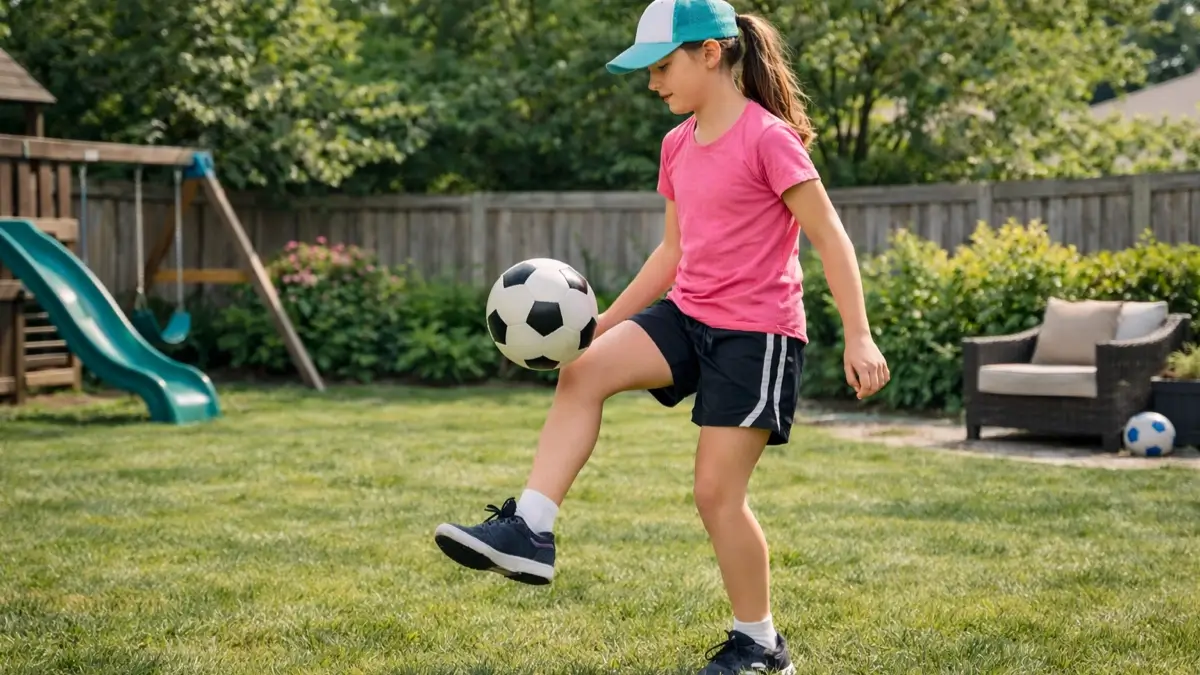
    Young players benefit from activities such as dribbling around cones , passing the ball against a wall, juggling the ball (keeping it in the air using repeated touches with the feet or thighs), and playing small games with friends or siblings.

    Watching soccer can also help. Many young players learn by observing how experienced players move, pass, and create space on the field.

    Even ten minutes of casual practice several times a week can make a noticeable difference over time.

    As you can see if you create opportunities for your child to play the sport, practice during downtime, and even watching advanced or professional players play the sport, the exposure pays off when they get onto the field. 

    Frequently Asked Questions

    Here are a series of most frequenlty asked questions by parents (and their answers0 about how kids and youth can improve at soccer.

    How often should kids play soccer to improve?

    Most youth players improve through regular team practices and games. Practising with the ball for ten to fifteen minutes a few times each week at home can help build skills more quickly.

    What is the most important skill for young soccer players?

    Ball control is the foundation of the game. Players who can dribble, stop, and pass the ball confidently tend to develop faster in other areas.

    Does juggling the ball help players improve?

    Yes. Juggling means keeping the ball in the air using repeated touches with the feet, thighs, or head without letting it hit the ground. It improves coordination, balance, and touch on the ball.

    Should kids focus only on soccer?

    Many coaches encourage younger players to try multiple sports. Different activities help develop coordination and athletic ability that benefits soccer later.

    At what age should soccer training become more serious?

    Training often becomes more structured around the U10 to U12 stage when players begin understanding tactics and teamwork.

    Is private coaching necessary?

    Private training can help older players refine specific skills, but it is not necessary for most children. Consistent team training and informal play provide strong development.

    Why do some players improve faster than others?

    Children develop at different rates physically and mentally. Confidence, practice habits, and playing experience all influence improvement.

    Is watching soccer helpful for young players?

    Yes. Watching games can help young players understand movement, teamwork, and decision-making. Expose them to professional league play and get out and watch local games as well.

    How can parents support improvement without creating pressure?

    Encouragement, patience, and opportunities to practise usually help more than criticism or intense expectations.

    What keeps kids motivated to improve in soccer?

    Enjoyment is the strongest motivator for kids that play soccer. Players who feel supported by coaches, teammates, and parents are more likely to continue practising and developing their skills.

  • How to Choose a Youth Sports Program, Beyond Winning

    You and your child have chosen a sport for the upcoming season. Maybe it’s soccer, or hockey. Perhaps a new activity they’ve been curious about. Now you need to decide between activity providers.

    If you’re wondering how to choose a youth sports program, it can feel straightforward at first. If the schedules work and the location and fees are reasonable, then it might seem like an easy choice between providers. 

    However there is one final question to ask.  At some point in the season, your child will make a mistake on the field or on the ice. They’ll miss a pass, fall behind in a drill, or miss a shot on goal. Then they’ll look toward the bench.

    What happens next will tell you far more about a kids sports program than last year’s standings ever could.


    Find and compare kids’ programs and clubs on the GoPlay platform. Free to browse, no account needed. Visit: https://app.goplay.ai or click the button below


    So ask yourself and your child: What matters more: winning or fun?

    Sometimes to a junior athlete, winning is important. More often than not, however, it is the experience that matters. Will it be fun and fulfilling? Ask your child. Most will want the latter or a balance between the two.

    If you’ve ever worked on a corporate team, you’ve seen this dynamic play out. In any company, the department head sets the tone. Some leaders create high-pressure environments where results come first. Others build a culture where expectations are clear, feedback is direct and people feel supported enough to improve. In those environments, performance rises because people are not afraid to try.

    Youth sports are not dissimilar. The coach sets the culture because they decide what effort looks like, what is praised and how mistakes are handled. They determine whether players feel safe enough to take risks or start playing cautiously to avoid criticism.

    U.S. psychologist Carole Ames, whose research on achievement goals is widely cited in youth sport studies, found that children are more likely to stay engaged when effort and improvement are emphasized over constant comparison. When progress is what gets noticed, enjoyment tends to follow.

    So, when you’re choosing a youth sports program, a good rule of thumb is start with the coach to get a feel for the team dynamic and how the season might unfold. 

    Evaluate the Coach Before Registering

    If possible, have a direct conversation with the program director or coach before committing to a kids sports program. Ask them what they focus on with your child’s age group. What does a successful season look like? Check in on how they will handle player mistakes during practices and games. And, ask how they  support players who are still developing.

    A development-first youth sports coach usually talks about skill progression, teamwork, effort and confidence. A win-first coach often leads with competition, standings and outcomes. You are not deciding which philosophy is right in general, but more so which sports environment fits your child.

    Psychologists Edward Deci and Richard Ryan, whose research on motivation is widely used in sport and education, found that people are more likely to stay engaged in challenging activities when they feel capable and supported rather than controlled. In youth sports, that translates into clear instruction, steady encouragement, and room to improve. Pressure might create urgency in the moment, but support builds staying power.

    If your child is more prone to anxiety, ask the program how coaches respond when a child gets stuck, feels overwhelmed, or needs a calm, confident adult to help them through it. It is completely normal for parents to worry about this, especially in a new environment. A good coach sees each child as an individual with their own temperament and needs, and knows how to meet them where they are while helping them grow over time.

    If you can, watch a practice before registering your child for a sports team. You can also ask another parent about the program if they have had a child in it during a previous season.

    If you can attend a session ahead of time, pay attention to whether coaching instructions are clear and brief. Watch how the coach speaks to the strongest player and the most hesitant one. You want to assess the playing environment and the coaching staff’s style, tone, and ability to handle different temperaments and skill levels.

    What a Strong Youth Sports Practice Looks Like

    For younger athletes, a quality youth sports program should be active and organized. Children should be active and on the playing surface and not on the side lines waiting for their turn, at least not excessively. Coaches should be circulating and giving helpful and constructive feedback. 

    If a practice feels chaotic, so will the season. Rigid or tense drills will erode enthusiasm among the kids over time. That is not to say intensity should be avoided. A balance is always what you want to see. When choosing a sports program, look for structure with energy and clear expectations without constant pressure.

    The “fun factor” is supported by science. The Aspen Institute’s State of Play research consistently reports that when young athletes say sport “isn’t fun anymore,” they are far more likely to quit. Enjoyment is one of the strongest predictors of whether children continue playing youth sports.

    Playing Time, Development and Long-Term Growth

    Playing time is one of the most common sources of frustration in youth sports, and it is preventable with clear communication. As such, ask how playing time works at your child’s age. Many recreational youth sports programs provide equal or near-equal time, while competitive programs may not. 

    A program that rotates positions and gives broad exposure supports long-term athletic development. This is especially important if your child is still building confidence. Development requires participation, not just attendance.

    Signs of a Healthy Youth Sports Culture

    When selecting a youth sports program, culture matters as much as coaching credentials.

    Watch how teammates respond when someone makes a mistake. Do they encourage one another? Does the coach model respect toward referees and opponents? Are quieter players included? All these things matter and contribute to a great playing experience for your child.

    Within one or two sessions, you can usually tell whether kids feel comfortable or cautious. Coaches who correct mistakes without humiliation and challenge players without creating fear tend to build stronger, more confident athletes.

    Practical Factors When Choosing a Youth Sports Program

    Beyond coaching style and culture, review program logistics carefully. Confirm total costs, including uniforms, tournaments and additional fees. Understand travel expectations. Ask how communication works and how schedule changes are handled. Strong youth sports programs communicate clearly and consistently.

    Also consider safety. Coaches should be able to explain injury protocols, including concussion procedures. You should feel comfortable asking direct questions. Clear answers from staff will allay your concerns and put you at ease.

    Quick Checklist: How to Choose the Right Youth Sports Program

    Before committing, look for these markers:

    • The coach clearly explains their approach for your child’s age group
    • Practices are active, organized and age-appropriate
    • Playing time policies are transparent
    • Total costs are clearly outlined
    • Safety procedures are communicated and understood
    • Communication with parents is consistent and structured
    • Your child feels comfortable and engaged after early sessions

    Choosing a youth sports program is not about finding perfection. It’s about finding alignment between the program’s culture and your child’s needs. 


    Find and compare kids’ programs and clubs on the GoPlay platform. Free to browse, no account needed. Visit: https://app.goplay.ai or click the button below


    Frequently Asked Questions

    This FAQ will help you better understand the answers to choosing the most common youth sports programs.

    How do I know if a youth sports program is the right fit for my child?

    The best indicator is how your child feels after practices and games. If they come home talking about what they learned, who they worked with and what they want to improve next time, that is a positive sign. If they seem consistently anxious, withdrawn or worried about making mistakes, the environment may not be the right fit. Comfort and steady growth matter more than wins.

    Is it better to choose a competitive program or a recreational one?

    That depends on your child’s personality and goals. Recreational programs often emphasize participation, equal playing time and skill development. Competitive programs may prioritize performance and standings. Neither approach is inherently better. The key is alignment between the program’s expectations and your child’s interest level and confidence.

    How important is the coach’s personality?

    Very important. Coaches shape the tone of the season. A coach who communicates clearly, stays calm under pressure and treats players with respect creates a stable environment. Children are more likely to stay engaged when they feel encouraged and supported rather than criticized or compared.

    Should I be concerned if my child is not getting much playing time?

    It is reasonable to ask questions about playing-time policy. At younger ages, equal or near-equal playing time is common. As competition levels increase, playing time may reflect performance. Clear communication is essential. If expectations were explained in advance, frustration can usually be avoided.

    What role does fun really play in development?

    Enjoyment is closely tied to long-term participation. Research from the Aspen Institute’s State of Play initiative has found that when children report that sports are no longer fun, dropout rates increase significantly. A positive experience supports skill development, confidence and resilience.

    Is it a problem if my child wants to quit mid-season?

    Start by asking them why they want to quit the team. Give them room to speak honestly without interrupting or dismissing their concerns. They may feel overwhelmed by expectations, socially uncomfortable with teammates, frustrated about playing time or simply tired from balancing school and activities. Sometimes the issue is temporary and tied to a single tough practice or game. Small adjustments can help. A conversation with the coach, clearer expectations or a short reset may resolve the problem. If the program truly is not a good fit after those efforts, it may be reasonable to reconsider participation and withdraw respectfully.

    How much should safety influence my decision?

    Safety should be non-negotiable. Coaches should understand basic injury protocols, including concussion procedures, and communicate them clearly. Organized warm-ups and attentive supervision are signs of a well-run program.